

 en
en  English
 Español


Content
- 1 Why HDPE Is the Preferred Material for Protein Powder Jars
- 2 Key Design Features That Affect Jar Performance
- 3 Comparing Common Jar Sizes for Different Protein Powder Volumes
- 4 Moisture and Oxygen Barrier Considerations
- 5 Labeling and Branding Options on HDPE Jars
- 6 Sustainability and Recyclability of HDPE Packaging
- 7 Quality Checks Before Ordering in Bulk
Why HDPE Is the Preferred Material for Protein Powder Jars
High-density polyethylene, commonly known as HDPE, has become the standard material for protein powder jars because it offers a practical balance of strength, moisture resistance, and cost efficiency that few alternatives can match at scale. Unlike PET, which is more commonly used for liquid beverages, HDPE has a slightly more opaque structure that naturally blocks more light, which helps protect light-sensitive ingredients like certain vitamins and added flavor compounds from degrading during storage and shelf display.
HDPE is also resistant to cracking under repeated impact, which matters for protein powder containers given how often they are dropped, shipped in bulk pallets, or handled roughly during gym bag transport. The material's chemical resistance is another advantage, since it does not react with the wide range of flavoring agents, preservatives, and amino acid compounds found in different protein powder formulations, which reduces the risk of off-flavors developing from container interaction over time.
Key Design Features That Affect Jar Performance
Not every HDPE jar performs the same way once it reaches a consumer's kitchen counter or gym locker. Several design details determine whether a jar holds up well through repeated daily use over the weeks or months it takes to finish a full container of powder.
Wide-Mouth Openings and Scoop Access
A wide-mouth opening, typically in the range of 80 to 110 millimeters in diameter, makes it significantly easier for consumers to insert a scoop without spilling powder around the rim. Narrower openings may look more compact on a shelf, but they often lead to powder clumping near the neck and make it harder to reach the bottom of the jar as the product gets used up. Brands packaging finer powders, such as collagen or whey isolate, generally benefit from wider openings more than brands packaging coarser textured blends, since fine powder is more prone to bridging and clumping inside a narrow neck.
Lid and Seal Types
Most protein powder jars use a screw-on lid paired with either a heat-induction seal liner or a simple foil seal placed under the cap before the first opening. Induction seals create a more reliable airtight barrier and are generally preferred for products with longer intended shelf lives, since they prevent moisture ingress during shipping and storage before the consumer breaks the seal. Some brands also add a secondary scoop-holder lid design, where a small compartment built into the underside of the cap holds the scoop in place, which improves user convenience but adds a small amount of cost and design complexity to the tooling.
Comparing Common Jar Sizes for Different Protein Powder Volumes
| Jar Capacity | Typical Servings | Common Use Case |
| 1 lb (450g) | 12 to 15 | Trial sizes and sample packs |
| 2 lb (900g) | 25 to 30 | Standard single-month supply |
| 5 lb (2.3kg) | 65 to 75 | Bulk value packaging |
| 10 lb (4.5kg) | 130 to 150 | Gym and commercial supply |
Moisture and Oxygen Barrier Considerations
Protein powder is highly sensitive to moisture, since even small amounts of humidity entering the jar can cause clumping, bacterial growth, or accelerated spoilage of added flavor compounds. While HDPE provides a solid baseline moisture barrier, it is not entirely impermeable, which means jar wall thickness becomes an important factor for products with longer expected shelf storage. Thicker-walled jars, generally above 1.2 millimeters, slow the rate of moisture vapor transmission more effectively than thinner economy-grade jars, making them a better choice for products sold through long retail supply chains rather than shipped directly and consumed quickly.
Adding a desiccant packet inside the jar is a common low-cost solution for brands using thinner-walled HDPE containers, since the packet actively absorbs residual moisture that enters through the cap seal or microscopic gaps in the plastic itself. For products containing probiotics or other moisture-sensitive active ingredients, some manufacturers go a step further and request a foil-laminated inner liner bonded to the jar wall, which significantly improves the overall barrier performance beyond what HDPE alone can provide.
Labeling and Branding Options on HDPE Jars
HDPE's slightly textured surface compared to PET means that label adhesion methods need to be chosen carefully to avoid peeling or bubbling over time. Pressure-sensitive labels with a strong acrylic adhesive generally perform well on HDPE jars and remain the most common labeling method for small to mid-sized supplement brands due to lower upfront cost. Shrink sleeve labeling, which wraps a printed plastic film around the entire jar and shrinks tightly using heat, offers a more premium full-wrap appearance and is increasingly popular for brands wanting shelf standout in competitive retail environments, though it requires additional equipment investment during the packaging process.
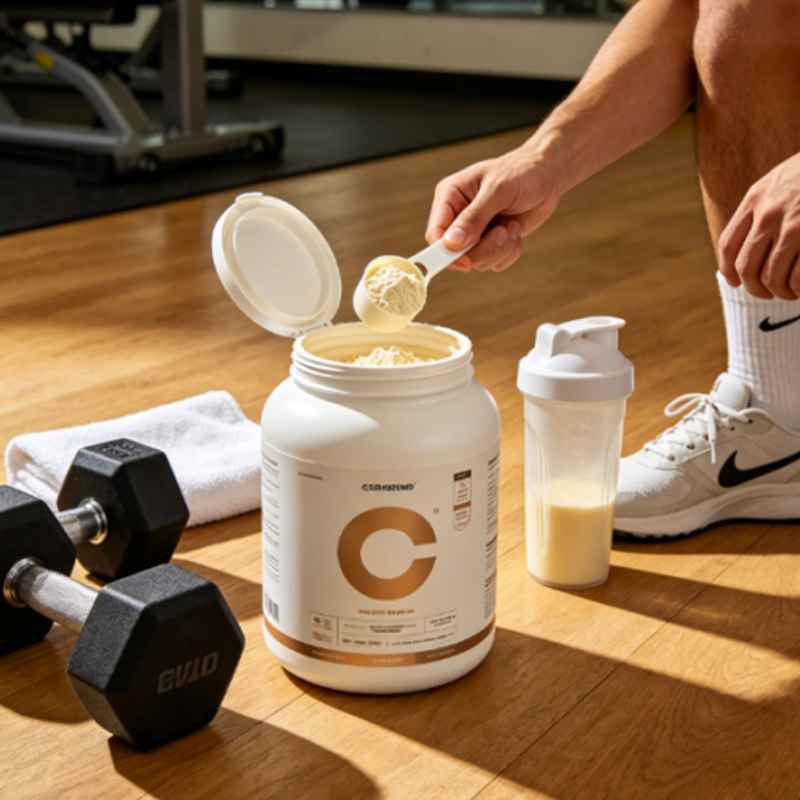
In-mold labeling is another option some larger brands use, where the label is fused directly into the jar wall during the molding process itself. This creates a label that cannot peel or wear off during shipping and handling, though it requires committing to a fixed design at the manufacturing stage, making it less flexible for brands that frequently update flavors or marketing claims.
Sustainability and Recyclability of HDPE Packaging
HDPE carries the recycling code 2, and it is one of the most widely accepted plastics in municipal curbside recycling programs across the United States and Europe, which gives it an advantage over less commonly recycled packaging materials. Brands looking to strengthen their sustainability positioning often use post-consumer recycled HDPE, abbreviated as PCR-HDPE, which incorporates reclaimed plastic from prior recycling streams into the jar's resin blend without significantly compromising strength or barrier performance.
It is worth noting that while HDPE itself recycles well, induction seal liners, foil layers, and certain plastic scoops packed inside the jar are not always recyclable through the same stream, so brands focused on full-package sustainability should evaluate every component rather than just the primary jar material when making sustainability claims to customers.
Quality Checks Before Ordering in Bulk
Before committing to a large production order, it is worth requesting physical samples to test seal integrity, drop resistance, and cap torque consistency, since variations in any of these areas can lead to product complaints after launch. A drop test from typical shipping heights, usually around one meter, helps confirm the jar will survive standard parcel handling without cracking at the base or neck. Cap torque testing, which measures how much force is needed to open and close the lid, should fall within a consistent range across the full batch, since inconsistent torque often signals problems with mold tooling or material flow during manufacturing.
- Request a certificate of food-grade compliance for any jar intended to hold consumable powder products.
- Test seal integrity under both hot and cold shipping conditions if the product will travel through varied climates.
- Confirm wall thickness consistency across multiple samples from the same production run rather than a single unit.
- Verify that the scoop, if included, fits securely without rattling loose during transit.
