

 en
en  English
 Español


Content
- 1 The Core Materials Used in Cream Jars — and How to Choose
- 2 Capacity Ranges and What They're Best Suited For
- 3 Lid Design: More Than Just a Cover
- 4 Airless Cream Jars: When Are They Worth the Premium?
- 5 Labeling and Decoration Options for Cream Jars
- 6 Sustainability in Cream Jar Packaging: Practical Steps Forward
- 7 A Pre-Purchase Checklist for Cream Jar Buyers
Cream jars are one of the most widely used packaging formats in the skincare and cosmetics industry — yet they're also one of the most misunderstood. The wrong jar can compromise product stability, frustrate end users, or undermine the premium positioning a brand works hard to build. Whether you're a cosmetic formulator selecting packaging for a new moisturizer, a retailer evaluating private-label options, or a consumer trying to understand what makes one jar worth the price over another, this guide covers the practical details that actually matter.
The Core Materials Used in Cream Jars — and How to Choose
Material selection is the most consequential decision in cream jar sourcing. It affects product compatibility, shelf life, consumer perception, and recyclability. The four primary materials are glass, acrylic, PP (polypropylene), and PET — each suited to different formulas and brand positioning.
Glass Cream Jars
Glass is chemically inert, meaning it won't interact with active ingredients like retinol, vitamin C, or AHAs — a significant advantage for high-performance skincare. It also provides a weight and tactile quality that signals luxury to consumers. The trade-offs are real, though: glass is heavier, more fragile, and more expensive to ship. For e-commerce brands or mass-market lines where breakage rates are a concern, glass is often not the practical first choice unless the product price point justifies it.
Acrylic Cream Jars
Acrylic closely mimics the visual weight and clarity of glass while being significantly lighter and shatter-resistant. It's the most common material in mid-to-premium cosmetic packaging and works well for water-based creams and emulsions. However, acrylic is not suitable for formulas with high concentrations of essential oils or organic solvents, as these can cause crazing (micro-cracking) on the surface over time. Always confirm compatibility with your specific formula before committing to acrylic jars at scale.
PP and PET Plastic Jars
PP jars are cost-effective, lightweight, and chemically resistant to a wide range of cosmetic ingredients. They're the workhorse of the industry for everyday moisturizers, body butters, and mass-market skincare. PET offers better clarity than PP and is widely accepted in recycling streams, making it a stronger option for sustainability-focused brands. Neither material carries the same perceived premium as glass or acrylic, but with the right surface finish — matte, frosted, or metallic — plastic jars can be elevated significantly.
Capacity Ranges and What They're Best Suited For
Cream jar capacity should align with your product's intended use frequency, price point, and target customer. Choosing the wrong size leads to either product degradation (too large — the cream oxidizes before it's used) or a poor value perception (too small for the price).
| Capacity | Typical Use Case | Notes |
|---|---|---|
| 5–15ml | Travel size, samples, eye cream | High perceived value per ml; ideal for luxury trials |
| 30–50ml | Face moisturizer, serums, targeted treatments | Most popular range for premium facial skincare |
| 100–200ml | Body cream, hand cream, salon use | Needs wide mouth for easy scooping |
| 250ml+ | Professional-grade body butter, refill formats | Stability and wide base critical at this size |
For facial creams containing active ingredients that degrade on air exposure — such as vitamin C or retinaldehyde — smaller jars in the 15–30ml range are preferable even if the price per unit is higher. Limiting air exposure by reducing jar size meaningfully extends the effective potency of the formula.
Lid Design: More Than Just a Cover
The lid is the most frequently touched component of a cream jar and has an outsized effect on user experience and product integrity. There are several lid types to evaluate:
- Standard screw caps are the most common and cost-effective option. Look for at least 3 full thread turns for a secure, airtight seal. Caps with an inner liner or foam insert provide additional protection against leakage and oxidation.
- Double-wall lids use an outer decorative shell over an inner functional cap. This design allows for high-gloss or metallic finishes on the outer surface without those materials coming into contact with the product — important for formulas sensitive to metal ions.
- Press-and-turn child-resistant caps are required by regulation for certain product categories in markets like the US and EU. If your cream formula includes concentrations of specific actives that fall under child-safety packaging regulations, this is non-negotiable.
- Inner lids or secondary seals are a separate disc inside the jar that sits directly on the cream surface. These are particularly effective for jars that will be sold in humid climates or stored in bathrooms where condensation is a concern.
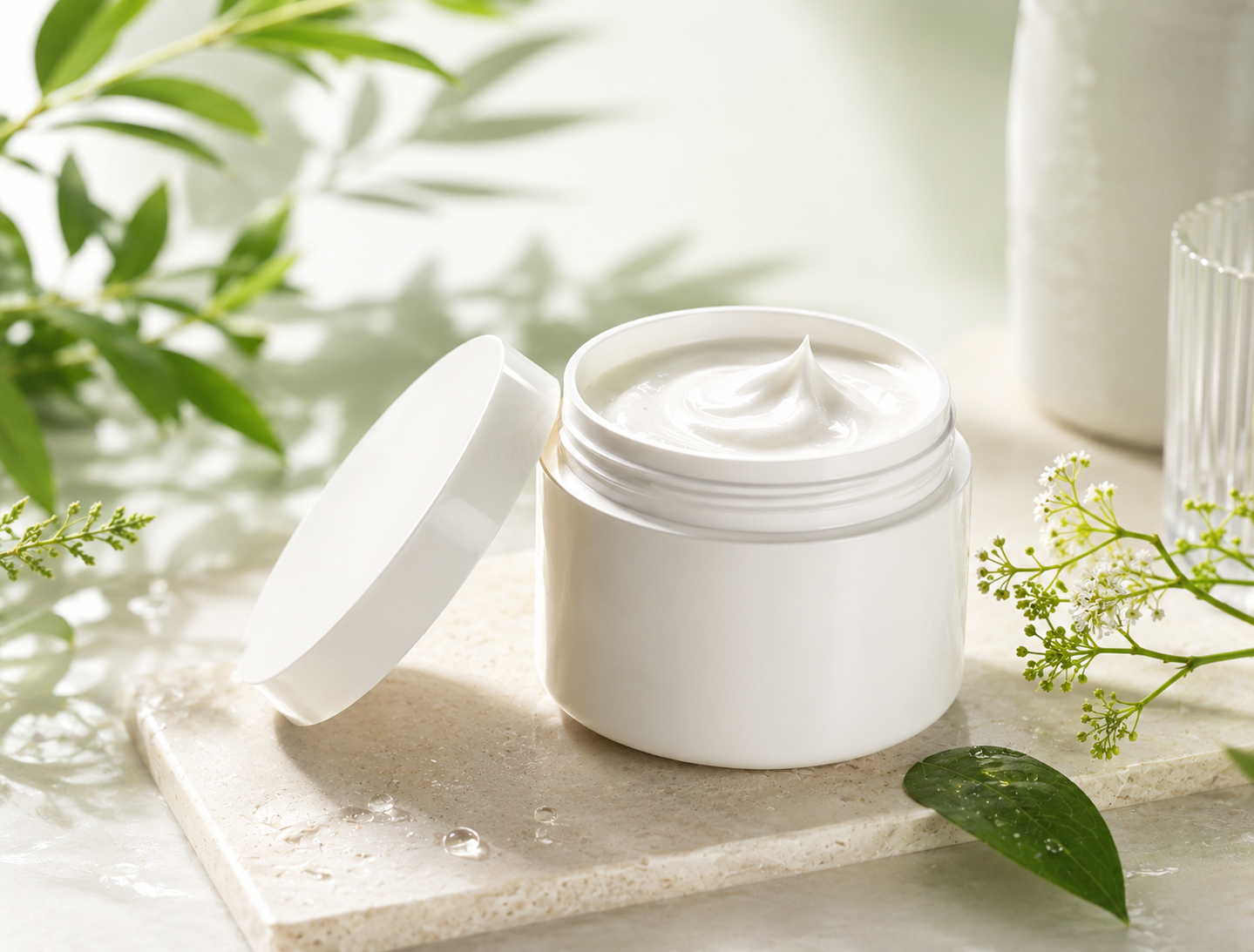
The lid finish should also align with your brand language. A brushed aluminum lid communicates clinical precision; a glossy white cap reads as clean and minimalist; a matte black finish projects luxury. These associations are subtle but consistent, and consumers notice them even when they can't articulate why.
Airless Cream Jars: When Are They Worth the Premium?
Airless cream jars use a vacuum pump mechanism to dispense product without allowing air back into the chamber. Every press moves a follower disc upward, pushing product through a nozzle or pump head. This design eliminates the oxidation and contamination risks associated with open-dip jars, making it especially valuable for formulas containing:
- Unstabilized vitamin C (L-ascorbic acid) at concentrations above 10%
- Retinol or retinaldehyde, which degrade rapidly on air exposure
- Preservative-free or low-preservative natural formulas
- Products marketed for consumers with sensitive skin who avoid repeated finger contamination
The cost premium for airless jar packaging is typically 30–60% higher than standard jars of equivalent capacity, and the mechanism adds complexity to filling line requirements. For brands with standard emulsion formulas using conventional preservative systems, the performance benefit is marginal. For brands built around active ingredient efficacy, the investment is often justified — and can even become a selling point in product marketing.
Labeling and Decoration Options for Cream Jars
How a cream jar is decorated directly influences how a product is perceived at point of purchase and in the hands of the consumer. The main decoration methods differ in minimum order requirements, durability, and aesthetic output.
Pressure-sensitive labels (PSL) are the most flexible option for small to mid-size runs. They allow full-color printing and can be applied to the jar body or lid. Durability in wet conditions varies — look for labels rated for bathroom use, with moisture-resistant adhesive and a protective laminate finish to prevent peeling or smearing.
Screen printing directly onto the jar surface produces a clean, premium look and withstands moisture well. It's cost-effective for two to four colors on larger runs (typically 5,000+ units) but becomes expensive for complex multi-color artwork. Screen-printed jars are particularly popular in the luxury skincare segment for their understated, tactile quality.
Hot stamping and embossing add dimensional detail — metallic foil logos, raised text, or debossed patterns — that is difficult to replicate with labels alone. These techniques are applied to lids more often than jar bodies and are standard in prestige cosmetic packaging. Minimum orders and tooling costs are higher, but the differentiation at shelf is significant.
Shrink sleeve labels offer 360-degree coverage with photographic print quality and are widely used for body cream jars at mass-market price points. Confirm the jar profile is compatible with sleeve application — deep undercuts or very angular shapes require custom sleeve pre-forms that add to tooling costs.
Sustainability in Cream Jar Packaging: Practical Steps Forward
Consumer pressure on cosmetic packaging sustainability is intensifying, and cream jars present both challenges and opportunities in this area. A few practical considerations for brands evaluating their options:
- Single-material jars (body and lid in the same material) are significantly easier for consumers to recycle correctly than multi-material assemblies. An all-PP jar with a PP lid is more recyclable in practice than an acrylic jar with a metal lid, even if both are technically recyclable.
- Post-consumer recycled (PCR) content is now available in PET and HDPE jar formats at commercially viable minimum order quantities. PCR content of 30–50% is achievable without significant compromise to clarity or structural integrity.
- Refillable jar programs — where consumers purchase a replacement insert rather than an entire new jar — are gaining traction at the premium end of the market. The economics work best when the outer jar is a significant design or material investment (e.g., heavy glass or custom-molded acrylic) that justifies being retained.
- Avoiding mixed materials in lids is a simple, low-cost way to improve recyclability without redesigning the entire package. Replacing metal overcaps with matching plastic alternatives is increasingly common among brands that have made sustainability commitments.
The most effective sustainability improvements in cream jar packaging are typically those that reduce material use overall — lighter walls, smaller capacity matched to realistic usage cycles, and elimination of unnecessary secondary packaging — rather than material substitutions alone.
A Pre-Purchase Checklist for Cream Jar Buyers
Before finalizing your cream jar selection, run through the following questions to ensure the packaging aligns with your formula, brand, and market requirements:
- Has material compatibility been confirmed against your formula's full ingredient list, including preservatives and actives?
- Is the jar capacity appropriate for realistic usage duration — will the cream degrade before the jar is finished?
- Does the lid provide an adequate seal for your distribution and retail environment (humidity, temperature variation, transport)?
- Is an airless format warranted based on formula sensitivity to oxidation or contamination?
- Are decoration options compatible with your target order volume and budget?
- Does the jar meet regulatory requirements for your target markets (child-resistant packaging, recyclability labeling)?
- Is the material and construction aligned with your brand's sustainability commitments?
A cream jar that passes this checklist isn't just a container — it's an active participant in product performance, brand perception, and customer satisfaction. The time spent evaluating these factors before placing an order is consistently returned in fewer reformulations, lower return rates, and packaging that genuinely works for both the product and the people using it.
