

 en
en  English
 Español


Content
- 1 The Core Question: Why Does Plastic Choice Matter for Detergent Packaging?
- 2 What PE and PET Are and How They Differ Structurally
- 3 Chemical Compatibility: Why Detergent Attacks PET But Not PE
- 4 Environmental Stress Cracking: HDPE vs PET in Real Use Conditions
- 5 Processing Advantages: Blow Molding PE vs Stretch Blow Molding PET
- 6 Direct Property Comparison: HDPE vs PET for Detergent Bottles
- 7 Where PET Does Play a Role in Detergent Packaging
- 8 Recyclability and Sustainability Considerations
The Core Question: Why Does Plastic Choice Matter for Detergent Packaging?
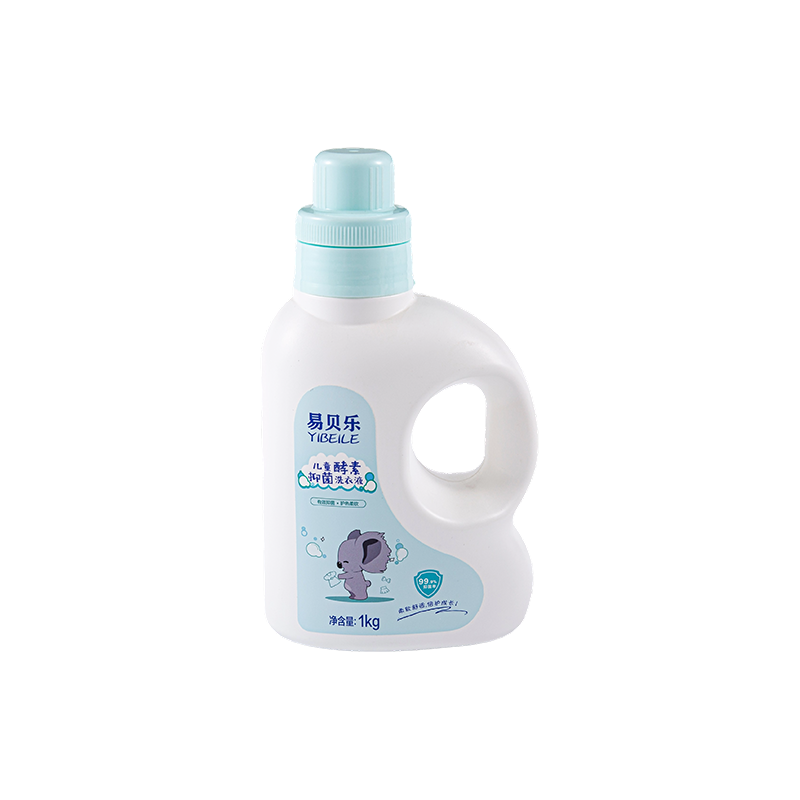
Walk down any supermarket laundry aisle and the packaging is almost entirely opaque, squeezable, and made from high-density polyethylene — HDPE, a member of the polyethylene (PE) family. PET, the clear rigid plastic used for water bottles and many food containers, is conspicuously absent. This is not coincidence or aesthetic preference. It is the result of a well-established engineering decision rooted in the chemical compatibility, mechanical behavior, processing economics, and recyclability of each polymer when in contact with concentrated surfactant formulations over extended periods.
For packaging engineers, procurement managers, and brand owners selecting materials for liquid detergent products, understanding exactly why PE dominates this category — and where PET still has a supporting role — is essential for making informed decisions about container design, supplier qualification, and sustainability commitments. The answer involves chemistry, stress mechanics, processing technology, and the practical realities of supply chain and recycling infrastructure.
What PE and PET Are and How They Differ Structurally
Polyethylene (PE) is a polyolefin — a polymer built from ethylene monomers linked into long chains with a simple, largely nonpolar backbone. Depending on the degree of chain branching and density, PE falls into subgrades: low-density polyethylene (LDPE), linear low-density polyethylene (LLDPE), and high-density polyethylene (HDPE). For laundry detergent bottles, HDPE is the dominant choice. HDPE has a density of 0.941–0.965 g/cm³, a high degree of crystallinity, and a relatively nonpolar molecular structure that gives it outstanding resistance to polar solvents, bases, and most surfactant systems.
Polyethylene terephthalate (PET) is a polyester — a polymer formed by condensation of terephthalic acid and ethylene glycol, producing a chain with ester linkage groups along the backbone. PET is typically amorphous after processing (transparent and glassy) unless oriented, in which case it becomes semi-crystalline with high tensile strength and excellent gas barrier properties. Its ester linkages, which are responsible for many of its positive attributes in beverage packaging, are also the source of its vulnerability when exposed to highly alkaline or strongly surfactant-active environments over time.
Chemical Compatibility: Why Detergent Attacks PET But Not PE
Laundry detergent is a complex chemical formulation. A typical liquid detergent contains anionic surfactants (such as linear alkylbenzene sulfonate), nonionic surfactants (such as alcohol ethoxylates), builders or chelating agents, enzymes, optical brighteners, fragrances, and a pH that commonly ranges from 8 to 11 — firmly in the alkaline zone. Some concentrated detergents and pods push pH even higher. This alkaline surfactant environment is precisely where the chemical differences between PE and PET become critical.
HDPE's nonpolar backbone has virtually no reactive sites for the surfactants or alkalis in detergent formulations to attack. The polymer chains resist swelling, hydrolysis, and chemical absorption under typical storage conditions from ambient temperature up to 50°C. Long-term compatibility studies consistently show HDPE retaining its physical properties — tensile strength, impact resistance, wall thickness — after twelve or more months of contact with commercial detergent concentrates.
PET's ester linkages, by contrast, are susceptible to alkaline hydrolysis — a reaction in which hydroxide ions cleave the ester bond, breaking the polymer chain into shorter fragments and degrading molecular weight over time. This process is slow at room temperature but accelerates with increasing pH, surfactant concentration, and temperature. In a concentrated alkaline detergent stored in a PET bottle at elevated warehouse or shipping temperatures, the container walls can progressively lose structural integrity, leading to thinning, surface crazing, or in severe cases, bottle failure at the seams or base. This chemical vulnerability is the primary technical reason PET is not used as the primary material for concentrated liquid detergent containers.
Environmental Stress Cracking: HDPE vs PET in Real Use Conditions
Environmental stress cracking (ESC) is a failure mode unique to semicrystalline polymers, where exposure to a surface-active agent combined with mechanical stress — either residual from processing or applied during use — causes crack initiation and propagation at stress levels far below the polymer's bulk yield strength. Surfactants are among the most potent ESC-inducing agents for many plastics.
HDPE grades formulated for bottle applications are specifically selected for high environmental stress crack resistance (ESCR), measured by standardized tests such as ASTM D1693. Detergent bottle grades of HDPE routinely achieve ESCR values of 1,000 hours or more in concentrated surfactant solution under constant stress — far exceeding the requirements of typical product shelf life. The ESCR of HDPE can be tuned by adjusting molecular weight distribution and comonomer content, giving resin and bottle manufacturers precise control over this critical property.
PET is significantly more susceptible to ESC in surfactant environments, particularly at stress concentrations around the neck finish, handle attachment points, and base geometry — exactly the locations where mechanical stress from filling, capping, stacking, and handling accumulates. The combination of alkaline hydrolysis and ESC susceptibility makes PET a poor choice for heavy, large-format detergent containers that experience significant mechanical loading throughout the supply chain.
Processing Advantages: Blow Molding PE vs Stretch Blow Molding PET
The manufacturing process used to produce each type of bottle further reinforces why HDPE dominates detergent packaging. HDPE detergent bottles are produced by extrusion blow molding (EBM), a process in which a molten HDPE tube (parison) is extruded and then inflated inside a mold to form the finished container. EBM handles large volumes, complex handle geometries, and a wide range of bottle sizes with relatively simple tooling and fast cycle times. It is well-suited to the heavy-wall, large-format containers (1 liter to 5 liters) typical of detergent products.
PET bottles are produced by injection stretch blow molding (ISBM), a two-stage process that first injection-molds a preform and then reheats and stretch-blows it into the final bottle shape. ISBM produces exceptionally thin-walled, clear, lightweight containers with excellent gas barrier properties — ideal for carbonated beverages. However, the process is not well-suited to producing the thick-walled, opaque, handle-integrated geometries that detergent bottles require. The capital cost of ISBM equipment is also higher than EBM for equivalent output, and the tooling complexity for large, asymmetric containers with integrated handles adds further cost.
Direct Property Comparison: HDPE vs PET for Detergent Bottles
| Property | HDPE (PE) | PET |
| Alkaline Chemical Resistance | Excellent | Poor to Moderate |
| Surfactant ESCR | High (grade-dependent) | Low to Moderate |
| Flexibility / Squeeze-ability | High | Low (rigid) |
| Clarity | Opaque / Translucent | Clear |
| Suitable Process | Extrusion Blow Molding | Injection Stretch Blow Molding |
| Handle Integration | Easy (in-mold) | Difficult / Not standard |
| Density | 0.941–0.965 g/cm³ | 1.33–1.38 g/cm³ |
| Recycling Stream (US/EU) | Widely accepted (#2) | Widely accepted (#1) |
| Relative Material Cost | Lower | Moderate to Higher |
Where PET Does Play a Role in Detergent Packaging
PET is not entirely absent from the laundry category. It appears in specific applications where its properties are genuinely advantageous and the chemical exposure limitations are managed through formulation or format design. Single-dose liquid detergent pods are enclosed in a polyvinyl alcohol (PVA) film, so the PET outer packaging — typically a rigid canister or zip-lock pouch with a PET window — never contacts the detergent directly. In this role, PET's clarity and rigidity make it ideal for showing product through a window panel or providing a premium aesthetic for retail shelf presence.
Some premium or specialty detergent brands have experimented with PET bottles for diluted or neutral-pH fabric softeners and rinse aids, where the alkalinity is low enough that hydrolysis risk is minimal over the expected shelf life. Fabric conditioners, which are cationic surfactant systems at near-neutral pH, are considerably less aggressive than alkaline detergents and can be compatibly packaged in PET for shorter shelf life windows. However, even in these applications, HDPE remains cost-competitive and chemically safer, so the choice of PET is driven primarily by aesthetics — the transparency of PET allows color-tinted products to display their fragrance associations visually — rather than technical superiority.
Recyclability and Sustainability Considerations
Both HDPE and PET are accepted in curbside recycling programs in most developed markets and both carry strong recycled content use cases. However, their sustainability profiles in the context of detergent packaging differ in several important ways.
- Post-consumer recycled (PCR) HDPE from detergent bottles is one of the most valuable and well-established PCR streams. Several major detergent brands now incorporate 25–100% PCR HDPE in their bottles, sourced partly from the same category of bottles — a closed-loop model that is technically and commercially proven.
- HDPE's lower density (approximately 0.95 g/cm³ vs PET's 1.35 g/cm³) means a given volume of detergent requires less plastic mass to contain it in HDPE than in PET at comparable wall thickness, reducing material consumption per unit of product.
- Contamination from detergent residue is a recycling challenge for both materials, but HDPE detergent bottles are a well-understood input stream for recyclers, with established rinsing guidelines and sorting infrastructure. The coloring and pigments used in HDPE bottles can complicate optical sorting, which is why some brands are moving toward natural (unpigmented) or lightly pigmented HDPE to improve recyclate quality.
- Concentrated detergent formats in smaller HDPE bottles — a growing trend driven by both sustainability and consumer preference — reduce total plastic per wash dose significantly. A 500 ml concentrated HDPE bottle replacing a 1.5-liter standard-format bottle can reduce plastic packaging weight by 50–60% while delivering the same number of wash loads.
The verdict across chemical compatibility, mechanical performance, processing suitability, and sustainability metrics consistently points to HDPE as the correct material choice for laundry detergent primary packaging. PET's strengths — clarity, gas barrier, and rigidity — are assets in beverage and food categories but liabilities or irrelevant attributes in alkaline detergent applications. For packaging engineers and brand owners, this is one of the clearer material selection decisions in the consumer goods packaging landscape: match the polymer to the chemistry it will contain, and for concentrated alkaline detergents, that polymer is PE.
