

 en
 English
 Español


Content
- 1 What "Premium Functional" Actually Means
- 2 Europe: Regulation Rewrote the Brief
- 3 The United States: E-commerce Raised the Bar
- 4 Material Choice Is Now a Brand Decision
- 5 Where Premium Functionality Shows Up, Category by Category
- 6 The Half of Premium Packaging Buyers Never See
- 7 Questions Worth Asking Before You Approve a Tool
- 8 A Closing Note From the Factory Floor
Walk the packaging halls of any European or American beauty trade fair and a pattern appears within minutes. The bottles that stop people are rarely the loudest ones. They are the ones that feel right in the hand, dose the formula cleanly, survive a shipping carton, and still look composed on a bathroom shelf. That blend of appearance and mechanical reliability is what the trade now calls premium functional packaging, and it is quietly reshaping how brands in the EU and the US brief their suppliers.
We have spent more than three decades moulding containers for personal care, household and health brands, so the shift is easy to see from our side of the machine. Buyers used to send a mood board and a target price. Today they send a mood board, a target price, a recyclability requirement, a leak specification and a schedule tied to a launch date. The container has moved from costume to component.
What "Premium Functional" Actually Means
Premium once meant foil, heavy glass and a secondary carton that cost more than the formula inside it. Functional was the unglamorous word for pumps that did not drip. The two words have now merged, because shoppers on both sides of the Atlantic have become extremely good at noticing when a beautiful package fails.
A premium functional container has to deliver on several fronts at once:
- Consistent dosing, so a pump gives the same shot on day one and day thirty, even as the formula thickens or separates.
- Transit survival, with no weeping seams, cracked shoulders or loosened caps after a parcel network and a few thousand miles.
- Formula compatibility, resisting alcohol, acids, surfactants and sunscreen actives that attack the wrong resin or strip the wrong ink.
- Decoration that holds up to handling, scuffing and bathroom humidity rather than fading on the shelf.
- End-of-life clarity, through mono-material construction, refill options and recycled content a brand can actually document.
None of those points is decorative, yet each one changes how the product feels in use. That is precisely why premium functional containers are winning: they satisfy the buyer who reads the ingredient list and the buyer who chooses with their hands.
Europe: Regulation Rewrote the Brief
In Europe, the commercial case for better containers is now inseparable from the compliance case. The cosmetics framework already puts the burden of proof on the brand, and the broader sustainability agenda — producer responsibility fees, packaging waste rules, recyclability and recycled-content targets — has added a second layer of scrutiny that packaging teams feel every quarter.
The practical result is that European briefs reward containers that are simple to disassemble and easy to account for. A few patterns keep returning:
- Mono-material PP pumps and closures replacing mixed-material assemblies that cannot be separated at end of life.
- Refill systems where the primary bottle is designed for years of reuse rather than a single cycle.
- Recycled content written into the resin specification from the start, not retrofitted after tooling is approved.
- Decoration moved to in-mould approaches wherever a sleeve or label would interfere with recycling.
The hard part is that a lighter, mono-material bottle still has to feel premium. Removing grams is easy. Removing grams without losing wall stiffness, thread strength and the reassuring weight of a well-made bottle is where an experienced moulder separates itself from a fast one.
The United States: E-commerce Raised the Bar
American brands face a different pressure. A large share of premium skincare and personal care now arrives by parcel, and the package must survive a journey far less gentle than a pallet moving to a distribution centre. Drop testing, compression and closure torque have become launch-critical items rather than afterthoughts.
At the same time, the US market rewards packages that photograph well and open well — the unboxing moment carries real weight. That combination pushes brands toward PET where clarity and gloss help sell the formula, toward PE where squeeze recovery and impact strength matter, and toward broader formats for club channels where the pack has to look substantial on a large shelf.
Sun care illustrates the tension neatly. A sunscreen bottle needs a barrier that protects the actives, a cap that will not weep in a beach bag, and a surface that survives sunscreen-slicked hands after the third application. It also has to look clean and modern beside premium facial skincare. That is a materials question, a closure question and a decoration question at the same time.
Material Choice Is Now a Brand Decision
Most of the debates we sit in on come back to three resins. The table below is the short version we give buyers when they ask where to start.
|
Material |
Typical premium uses |
What it does well |
Watch-outs |
|
PE (HDPE/LDPE) |
Shower gel, body lotion, shampoo, household and disinfectant bottles |
Squeeze recovery, impact strength, broad chemical resistance, easy colouring and matte finishing |
Less gloss than PET; wall stiffness needs careful design in lightweight formats |
|
PP |
Cream jars, wide-mouth jars, caps, pumps, toner closures |
Heat resistance, hinge and thread durability, excellent for thick-wall jars |
Clarity is limited unless clarified grades are specified |
|
PET |
Toners, essences, serums, fine-mist sprays, transparent shampoo |
Glass-like clarity, good barrier for many formulas, strong shelf appeal |
Not ideal for aggressive solvents or very high heat; drop performance needs attention |
In practice the decision is rarely about one material winning. It is about matching the resin to the formula, then using mould design, wall thickness and decoration to deliver the premium feel the brand is paying for.
Where Premium Functionality Shows Up, Category by Category
Skincare and cream jars
Jars live or die on thread engagement, liner choice and how the lid sounds when it closes. A 50ml jar with a generous shoulder and a properly toleranced screw thread reads as luxury even before decoration, while a jar with a thin rim reads as cost-engineered. Refill pods and PCR grades fit naturally into this format because the outer jar is reused rather than discarded.
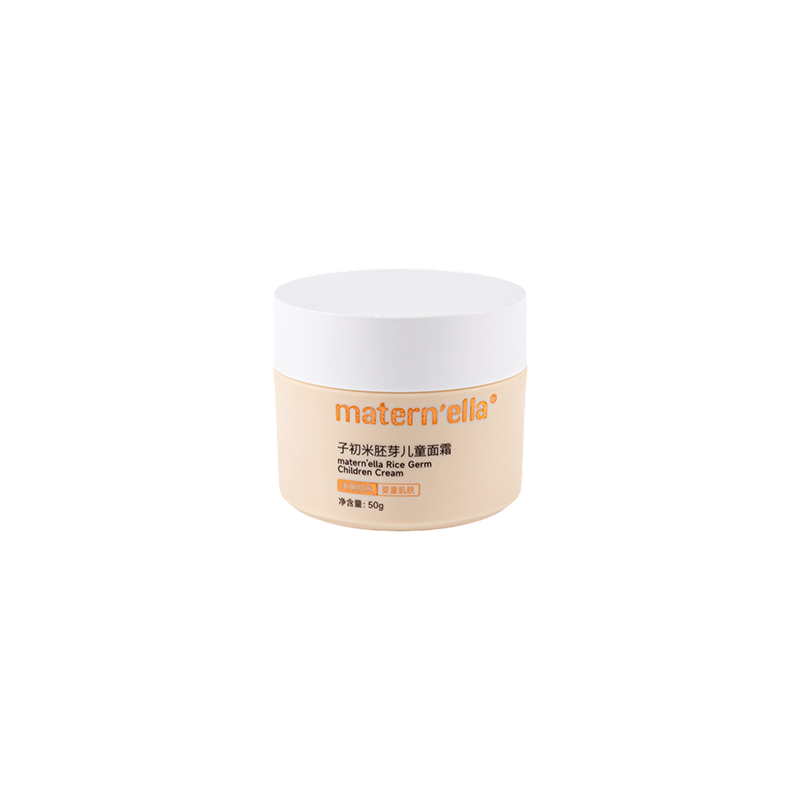 50ml Compact PP Skincare Jar for ChildrenA compact, safe PP jar with strong sealing and a clean white base, suited to children's face creams and portable skincare.View Product →
Body and hair care
Shower gel and shampoo bottles carry the most physical abuse: wet hands, tile floors, repeated squeezing. A 500ml PE bottle that recovers its shape after every squeeze, holds a stable print on a wet shelf and stacks cleanly in a pallet is doing quiet engineering work. This is also where wall thickness becomes an aesthetic decision, because a bottle that flexes in the hand feels cheap regardless of the label.
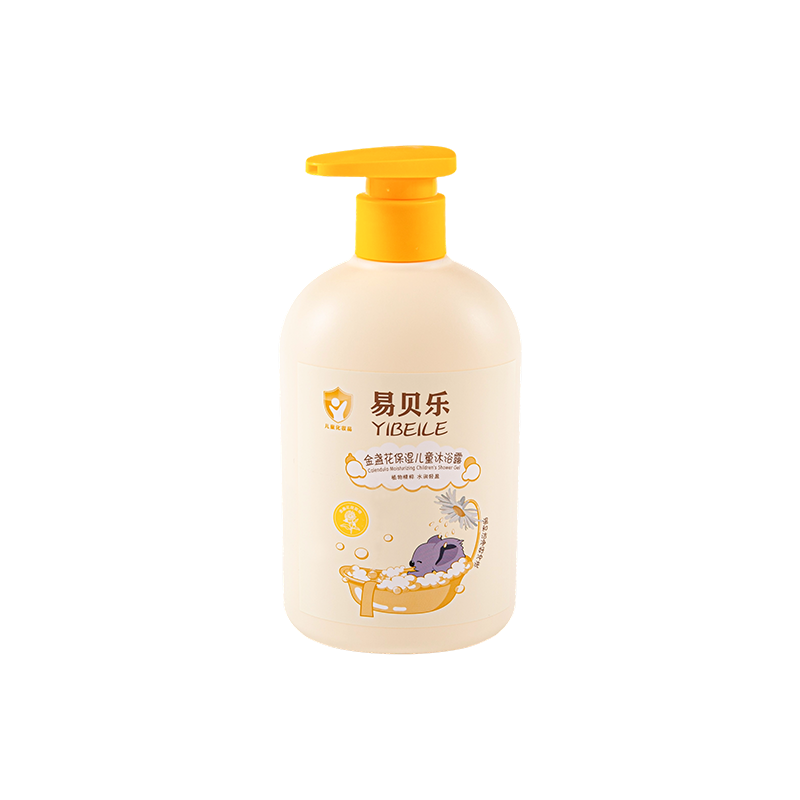 500ml PE Shower Gel Bottle with PumpA food-grade PE shower gel bottle with a 28-thread neck, drop resistance and a leak-proof yellow pump for controlled dispensing.View Product →
Mists, toners and sprays
Fine-mist packaging has become a premium category in its own right. Spray pattern, actuation force and the absence of spitting matter as much as the bottle's clarity, and they depend on how precisely the neck finish matches the pump. A well-matched PET spray bottle turns a toner into a daily ritual; a poorly matched one turns it into a household chore.
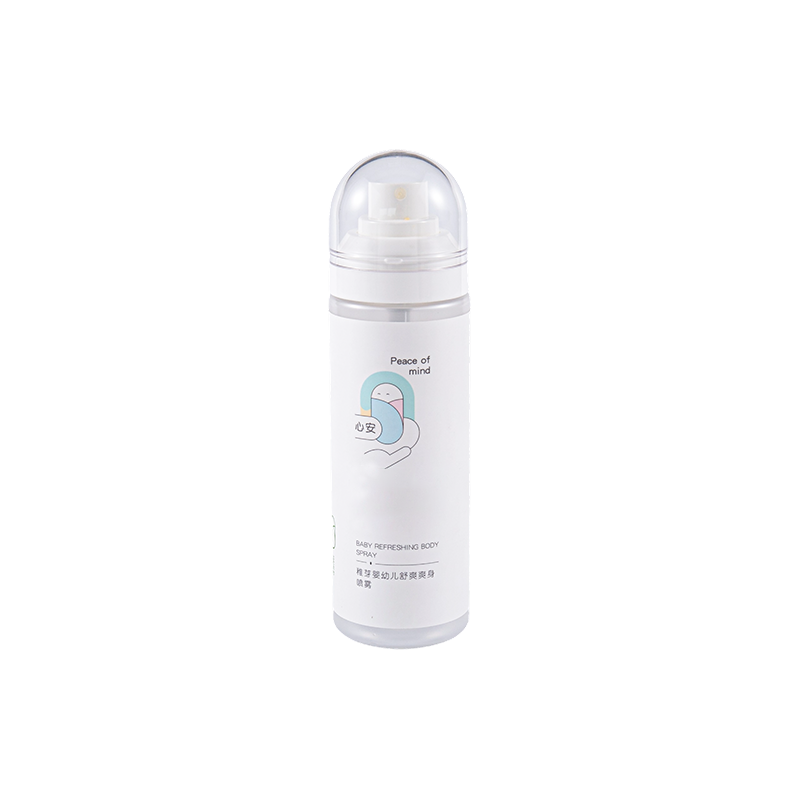 100ml Transparent Domed PET Spray BottleA lightweight PET spray bottle with a 32-thread neck and fine, even mist, suited to toner, moisturizing and setting sprays.View Product →
The Half of Premium Packaging Buyers Never See
Almost everything that makes a container feel premium is decided before decoration. It is decided when the mould is cut, when the wall thickness is balanced, when the resin is dried, and when the first samples are measured against a drawing rather than a photograph.
That is why we keep our own quality control process anchored in a Class 100,000 clean workshop, with inspection running from incoming resin through to final carton. Technical and quality staff make up roughly 40% of our team, and the same discipline applied to skincare containers is applied to food-contact and supplement packaging, where a contaminated batch is not a commercial problem but a safety one. In-house tooling, injection and all-electric blow moulding, plus printing, labelling and coating under one roof, also mean fewer handoffs — and every handoff is a place where a premium promise can quietly break down. If you want the detail, our manufacturing capabilities page walks through the equipment and the process flow.
Questions Worth Asking Before You Approve a Tool
Brands that get premium packaging right tend to ask similar questions early, while the design is still fluid:
- Does the supplier have an existing mould close to our shape, or will this be cut from scratch?
- Which resin matches our formula's solvent load, pH and fill temperature?
- What drop, compression and leakage data can be shared before we commit?
- Is the closure, pump or sprayer validated with this specific neck finish?
- Can decoration be done in-house, and how does it survive rubbing, alcohol and humidity?
- What recycled or mono-material options exist without changing the silhouette?
- What is the realistic lead time from tool approval to first production batch?
Good answers to those seven questions usually predict a smooth launch better than any brochure.
A Closing Note From the Factory Floor
Premium functional containers are winning in Europe and the United States because they solve a problem the market can no longer ignore: a package now has to be beautiful, durable, compliant and pleasant to use, all at the same time. That is not a marketing position — it is a manufacturing discipline, built mould by mould.
If you are weighing a container redesign for a launch next year, we are happy to talk through materials, moulds and decoration before the brief is frozen. Early conversations are almost always the cheapest ones.
