

 en
 English
 Español


Content
- 1 Lightweighting Is a Strength Question Disguised as a Weight Question
- 2 Read the Load Case Before You Touch the Mold
- 3 Where the Grams Actually Come From
- 4 The Tests That Tell You Where the Limit Is
- 5 Process Settings That Buy Back Strength
- 6 A Practical Sequence for a Lightweighting Project
- 7 Traps We See Most Often
- 8 Where a Manufacturing Partner Fits In
Lightweighting a PET preform looks like a simple arithmetic exercise: take a gram or two out of the preform, keep the same bottle volume, and watch the resin bill fall. In practice it is a strength problem wearing a weight problem's clothes. Food and drink manufacturers rarely get to choose between light and strong, because a bottle that fails on a pallet or in a chilled distribution chain costs far more than the resin it saved.
What follows is how we approach these projects on our own lines: where material can safely come out, what has to be validated before it does, and how to keep the finished bottle inside the strength envelope its filling process and logistics actually demand.
Lightweighting Is a Strength Question Disguised as a Weight Question
Preform weight is a proxy, not a property. What the consumer squeezes is the blown bottle, and the wall of that bottle is the preform's material stretched, thinned and biaxially oriented during blow molding. When you remove 10 percent of the preform mass, you remove roughly 10 percent of the material that has to cover the same surface area. Where that material leaves is what decides whether the bottle still works.
A preform that is 2 grams lighter in the body wall behaves very differently from one that is 2 grams lighter in the base. The first trades hoop strength and top-load resistance. The second trades impact resistance and stability under pressure. Treating both as “a lighter preform” is how projects end up with a bottle that passes the drop test in the lab and splits in a customer's car boot.
The commercial pressure to go lighter is real and varied: resin cost per thousand units, extended producer responsibility fees and packaging levies that scale with tonnage, freight emissions, and brand-level sustainability commitments. None of those drivers changes the physics, so the useful question is never “how light can we go?” but “what is the lightest bottle that still passes every test in its real distribution environment?”
Read the Load Case Before You Touch the Mold
Before any preform drawing changes, we write down what the pack has to survive: filling temperature, internal pressure, pallet height in the warehouse, how long it sits at 35°C in summer, how it is handled at the shelf, and how long the contents must stay within specification. Those answers decide which parts of the preform are candidates for thinning.
|
Pack type |
What the bottle must survive |
Where grams usually come off |
|
Still water |
Pallet top-load, drops, mild handling abuse |
Body wall, base ribs, gate area |
|
Carbonated soft drinks |
Internal pressure rising with temperature, creep |
Body wall thickness, petaloid base design |
|
Juice and nectar (hot fill) |
85–95°C fill, vacuum collapse during cooling |
Panels and vacuum compensation, not raw wall alone |
|
Edible oil and sauces |
Long shelf life, oxygen sensitivity, heavy stacking |
Mid-body thickness, sometimes a barrier layer |
|
Dairy and plant-based drinks |
Chilled chain, pasteurisation, light exposure |
Body, label panel, base corner radius |
This is also the stage where the closure decision should be locked. Neck finish dimensions are set by the closure standard rather than by the bottle designer, so the neck is effectively a fixed mass. Lightweighting happens in the body, the shoulder taper, the base and the gate.
Where the Grams Actually Come From
Neck Finish: The Fixed Part
A PCO 1810 or PCO 1881 neck carries a defined mass for a defined reason: it has to hold a closure, seal reliably at line speed, and survive capping torque. Short-neck finishes already removed several grams compared with older standards, but within a given finish there is almost nothing left to trim. Projects that promise weight savings by “rethinking the neck” usually end up changing the closure instead, which shifts cost to another supplier and another qualification cycle.
Body Wall and Stretch Ratio
Preform body wall thickness, combined with the blow ratio, sets the final wall of the bottle. Typical stretch blow molding works with an axial stretch of roughly 2.5 to 3 times and a hoop stretch of 3 to 4 times, and staying inside a sensible ratio range is what produces the strain-induced crystallinity that gives PET its strength and clarity. Push the hoop stretch too high by using a narrow preform in a wide bottle and the wall thins past the point where orientation helps; the material becomes glassy but brittle.
Base, Gate, and Ribs
The base does the structural work that nobody sees. In still water packs, a well-designed rib pattern can hold top-load with less material than a plain spherical base. In carbonated packs, base design has to control how pressure is distributed, and thinning it carelessly is the fastest route to footed or rocked bottles. The gate area is a frequent hiding place for excess resin; a cleaner gate design often saves weight without touching the visible wall at all.
Where a project needs a documented starting point, our PET preform specification sheet lists the weights, neck finishes and dimensions we run most often, so the conversation starts from real tooling rather than from a target gram figure invented in a meeting.
The Tests That Tell You Where the Limit Is
Lightweighting is only as good as the evidence behind it. A preform change should be signed off against a test set that mirrors the real supply chain, not just the lab bench:
- Drop testing at ambient and at chilled temperature, filled to the normal fill level, from the height and onto the surface the pack actually meets.
- Top-load and creep testing, ideally with a loaded pallet held at elevated temperature for days rather than minutes, because PET creeps slowly under sustained load.
- Internal pressure and burst testing for carbonated packs, including a pressure rise test that mimics a warm warehouse.
- Vacuum collapse checks for hot-filled packs, since paneling performance depends on wall distribution rather than average thickness.
- Thermal cycling between chilled and warm conditions to expose stress cracking before consumers do.
- Shelf-life and barrier checks, plus food-contact migration testing and resin documentation for every grade used.
One practical rule we apply: test at the edges of the process window, not at the sweet spot. A preform that only produces an acceptable bottle when every heater zone is perfectly set is a production liability, however good the lab result looked.
Process Settings That Buy Back Strength
A large share of lightweighting failures are actually reheat and stretch failures. With less material to work with, the preform's heat profile becomes far more influential: too cool and the wall will not orient properly, too hot and it stretches without building strength and may crystallise where you do not want it. Stretch rod speed and timing, blow valve sequencing and mold cooling all have to be re-tuned rather than reused.
Resin choice matters as well. Intrinsic viscosity, acetaldehyde content and the share of food-grade recycled PET all shift the processing window. Recycled content is increasingly a requirement rather than a nice-to-have, and it usually calls for tighter drying control and more careful validation, but it does not automatically prevent lightweighting. What it does do is narrow the margin for error, so the trial work has to be more disciplined.
A Practical Sequence for a Lightweighting Project
- Define the load case and the acceptance criteria, including filling line speed and pallet configuration.
- Model the change and run a blow simulation to see where wall thinning will land before cutting metal.
- Adjust preform geometry, not just gram weight, so material moves to the areas that carry load.
- Blow trials across the process window to map the working range rather than find one good setting.
- Physical validation against the test set, including chilled and elevated-temperature conditions.
- Production line trial at full speed, then lock the preform specification, process settings and incoming control limits.
Steps three to five are where most of the time is spent, and rightly so. The savings only appear once because the qualification happens once; a premature launch costs the savings back many times over in rejects and returns.
Traps We See Most Often
- Chasing a gram target before the closure and filling process are fixed, then redesigning twice.
- Validating only at room temperature and discovering creep problems in a summer warehouse.
- Ignoring label panel deformation, which shows up as wrinkled labels long before the bottle fails structurally.
- Switching resin grade mid-project, which resets the whole validation without anyone noticing.
- Assuming a preform weight that suits one bottle shape will suit another of the same volume.
- Forgetting that the filling line itself, with its conveyors, grippers and capping torque, is part of the load case.
Where a Manufacturing Partner Fits In
Lightweighting works best when the preform, the mold and the blow process are developed by the same team, because the compromises are technical rather than commercial. We have been making plastic packaging for more than 30 years, and our work covers mold development, injection molding, blow molding and the decoration steps that follow, which means a preform change can be evaluated against the whole bottle rather than in isolation.
Practically, that means design and simulation support before a tool is cut, an existing library of functional bottle molds to compare against, and a quality system built around food-contact and hygiene requirements, including a Class 100,000 clean workshop and inspection from incoming resin through to dispatch. You can see the equipment and process scope on our molding capabilities page.
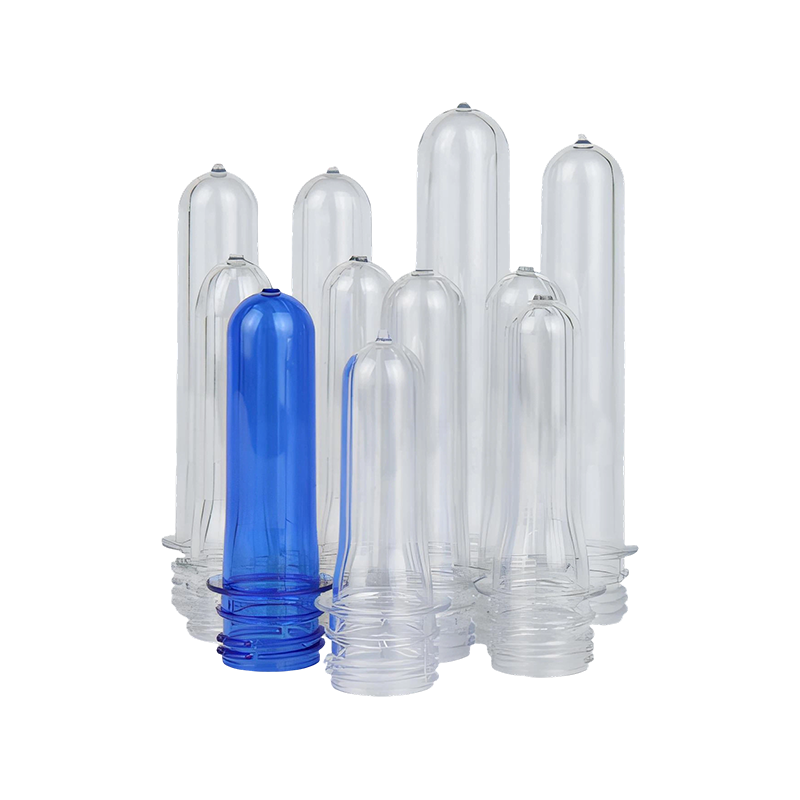 28mm PCO1810 High-Neck PET PreformsReference-grade preform showing neck, wall and length interaction before weight reduction, with food-grade PET and reinforced threads for carbonated beverage bottles.View Product →
Our standard 28 mm PCO 1810 preform at 14.55 g is a useful reference point for a high-neck design: it shows how neck geometry, body wall and length interact before a single gram is removed. From there, the preform can be re-dimensioned for a specific bottle and load case.
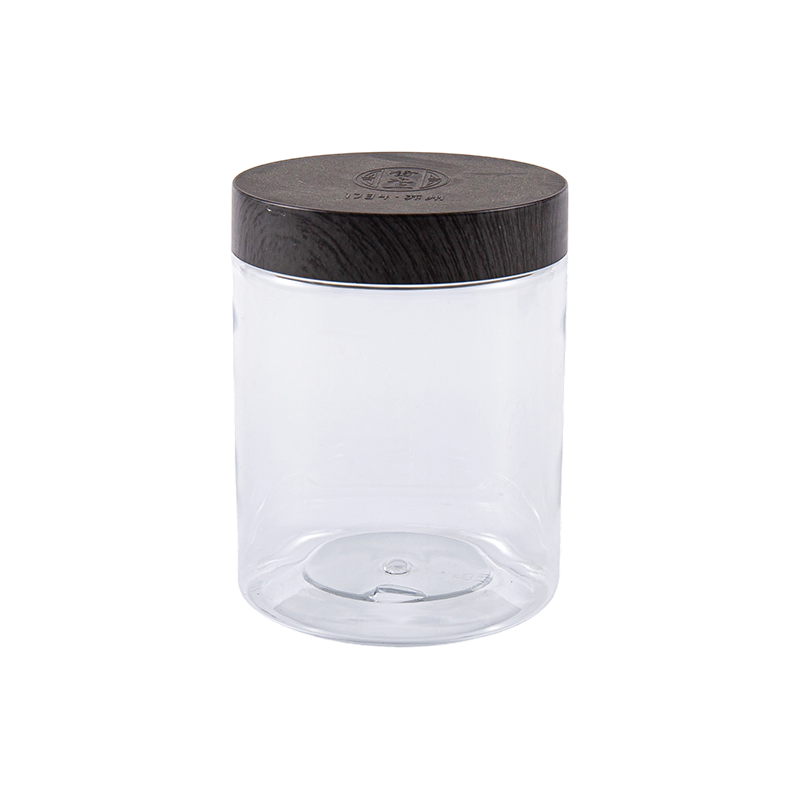 480ml Corrosion-Resistant Clear PET BottleTransparent PET bottle for personal care products with oils or active ingredients, offering chemical resistance, a sealing cap and clear product visibility.View Product →
The same discipline carries over to nutrition and supplement packs, where transparent PET containers have to stay clear, dimensionally stable and mechanically sound while material is reduced. Whether the contents are beverages, oils or nutrition products, the sequence stays the same: understand the load, move the material, then prove it.
If you are planning a lightweighting project, the most useful thing you can bring to the first conversation is not a target weight but a description of how the bottle travels, how it is filled, and what it must survive. From that, the gram figure tends to emerge on its own, and it usually turns out to be more ambitious than expected, provided the geometry and the validation are treated as seriously as the cost saving.
