

 en
 English
 Español


Content
Walk into any beauty aisle and you will see plastic cream jars. Face cream, eye cream, body butter, hair mask, lip balm, cream blush — the thick, rich products almost always live in a wide-mouth jar. The reason is practical: a viscous cream does not pour or pump out of a narrow neck, and a wide opening lets the user reach the last gram with a fingertip or a small spatula. For brands, the jar also offers a generous surface for decoration, which matters when a product line has to stand out on a crowded shelf.
We have been making plastic cream jars for more than thirty years, and the category has changed a great deal in that time. What has not changed is a simple truth: a beautiful jar is designed, but a reliable jar is manufactured. The notes below walk through the decisions that matter most, from material and capacity to closures, decoration and the quality checks that keep a brand out of trouble.
Why Plastic Cream Jars Still Dominate
Jars have been around for centuries, and the plastic version has not been replaced by anything better. Several practical reasons keep them in the lead:
- Wide mouth access: users can actually get the product out, including the last portion.
- Impact resistance: a dropped jar may scuff or crack, but it rarely shatters across a bathroom floor.
- Light weight: compared with glass, plastic cuts shipping weight and freight cost.
- Stacking: flat bases and stable shoulders make shelf and drawer storage easier.
- Decoration freedom: colour, coating, printing and frosting are all straightforward.
- Resealability: a well-made jar keeps a cream stable through months of repeated opening.
Glass still has a place in premium presentation, and metal tins work well for solid balms. But when a brand needs durability, cost control and design flexibility at the same time, plastic usually wins.
Start With the Material, Not the Look
It is tempting to choose a shape and colour first. In practice, the material decides how the jar will behave once it is filled, shipped and used.
| Material | Appearance | Chemical resistance | Common capacity | Typical application |
|---|---|---|---|---|
| PET | Glass-clear | Moderate | 15-80 ml | Gels, clear creams, eye products |
| PP | Translucent to opaque | Good | 50-110 ml | Face creams, body butters |
| PE | Opaque, soft touch | Very good | 80-250 ml | Body lotions, hair masks |
| PMMA | High gloss, thick wall | Moderate | 30-50 ml | Premium anti-aging lines |
PET gives the clearest view of the formula inside, which is a real advantage for a gel or a cream with visible texture. It is less comfortable with high concentrations of essential oils or alcohol. PP is the workhorse: it handles most cosmetic formulas without complaint, costs less than acrylic, and takes decoration well. PE is softer, more inert and usually chosen for larger body care formats. PMMA, often called acrylic, produces the thick, glossy wall associated with luxury lines, although it scratches more easily and adds weight.
For a general skincare range, a simple white PP jar is a very safe starting point: neutral, easy to decorate and predictable in transit.
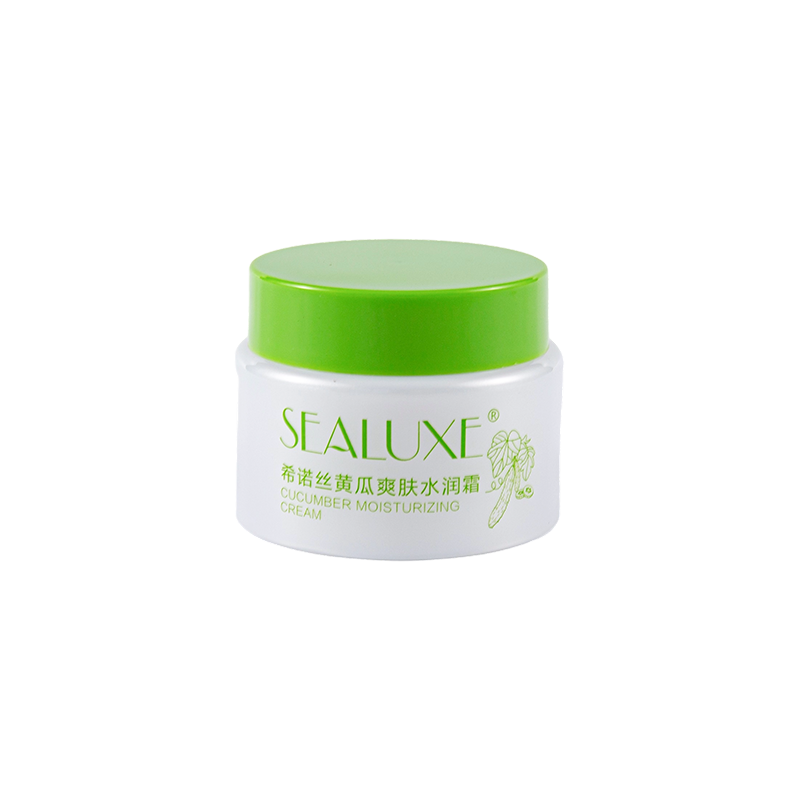 50 ml White PP Jar with Green CapA 50 ml white PP jar with green cap for face creams and moisturizers; a practical option for general skincare ranges.View Product →
Capacity and Neck Size: Matching the Jar to the Formula
Capacity gets most of the attention, and the usual range runs from 15 ml for an eye cream to 250 ml for a hair mask. But capacity answers only half the question. The other half is the neck diameter, the measurement that quietly determines how the jar feels in daily use.
How neck diameter changes the experience
- Small necks, around 38 to 48 mm, look refined but make it harder to reach the product.
- Medium necks, roughly 53 to 63 mm, balance appearance and access for most face creams.
- Wide necks, 70 mm and above, suit body products, masks and anything applied with the fingers.
Your filling line cares about this too. Neck size affects the nozzle, the clearance for a scraper, and how long the open product surface is exposed before capping. A wide-mouth jar such as a 110 ml PP format is a useful reference point when a brand wants to move beyond the standard face cream tin into larger body care volumes.
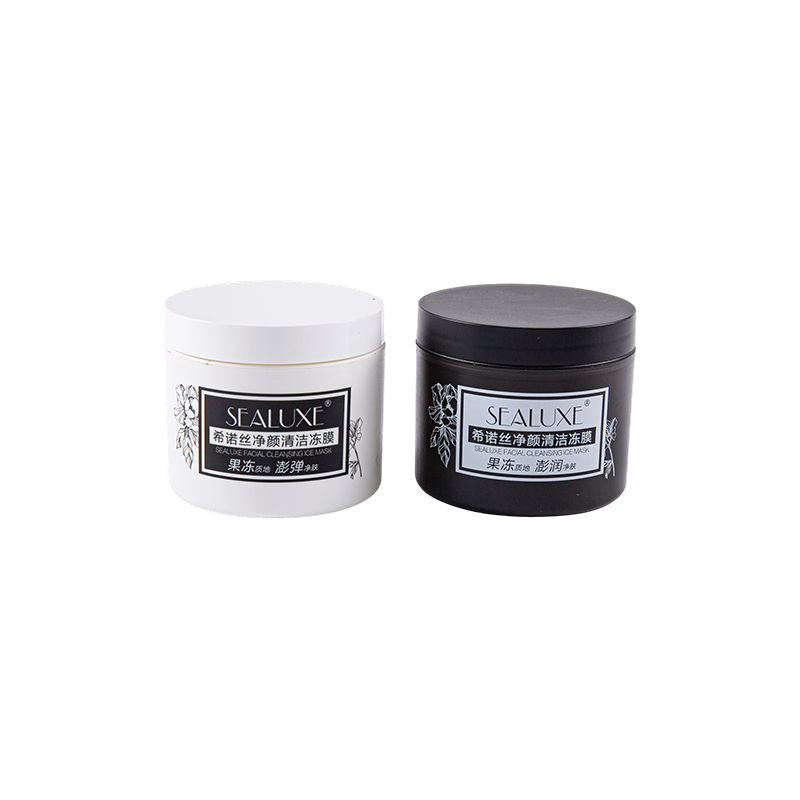 110 ml Wide-Mouth PP Jar for Thick CreamsA 110 ml wide-mouth PP jar in white or dark gray for thick creams and masks; useful for larger body-care volumes and accessible filling.View Product →
Closures, Lids and Liners
The lid is where sealing actually happens, and it deserves as much attention as the jar body. Common constructions include single-wall screw caps, double-wall caps with an inner cup, domed caps and press-in discs. Double-wall lids feel more substantial and are usually chosen for premium positioning, while single-wall caps keep cost and weight down.
The liner matters just as much:
- PE foam liners are the most economical option and work well with dry or low-oil formulas.
- PS foam liners seal better against oil-based creams and silicone-heavy textures.
- Aluminium foil liners give the strongest barrier and are common for fragrance-rich products.
- Induction-sealed membranes add tamper evidence for retail distribution.
Sealing performance is not a simple pass or fail. A liner that holds a water-based gel perfectly may let a highly silicone-based cream migrate slowly over months of storage. Testing with the real formula, at real temperatures, is the only reliable way to know.
Decoration That Survives the Bathroom Shelf
Once the jar works, the surface becomes the branding canvas. Screen printing is the most economical route and holds up well for one or two colours. Heat transfer printing handles finer detail and gradients. Hot stamping provides the metallic accents that many skincare brands use as a premium cue. Spray coating and frosting deliver an overall colour or a soft matte finish, and in-mould labelling produces a graphic surface that will not wear away.
Two practical warnings come from experience. First, dark and pearlescent finishes show dust and handling marks more readily than white, so they may need extra care on the filling line. Second, frosted surfaces change appearance once they meet skin oils; an effect that looks elegant in a sample photo can look uneven after a week of use.
Quality Checks That Protect the Brand
Most jar failures do not appear on the day of delivery. They show up in a warehouse, a shipping container or a customer's bathroom months later. A sensible quality routine covers:
- Leak testing under vacuum and after vibration.
- Torque testing to confirm the lid closes consistently on an automated line.
- Drop testing from packaging height to check impact behaviour.
- Wall thickness and weight checks for consistency across a production run.
- Odour and migration testing for food-contact or sensitive formulas.
- Print adhesion testing after abrasion and moisture exposure.
These checks are run in a Class 100,000 cleanroom, which also makes it possible to serve projects with strict hygiene requirements, including food-contact and high-end skincare packaging. Working in a controlled environment is not a marketing detail; it is what keeps a batch of white jars genuinely white and free of contamination.
Custom Moulds or Existing Specifications
A new mould takes time and budget. A straightforward jar and lid set usually needs several weeks from design to validation, and more if the structure is unusual, such as an off-centre lid with hidden threads. Many brands launch faster by starting with an existing specification and putting the money into good decoration, then investing in a proprietary mould once volumes are stable.
Standard formats can be surprisingly capable. A clear PET jar in the 45 ml range, for example, lets you skip tooling investment entirely and spend the budget on printing, hot stamping or a better liner instead — the parts of the package a customer actually sees and touches.
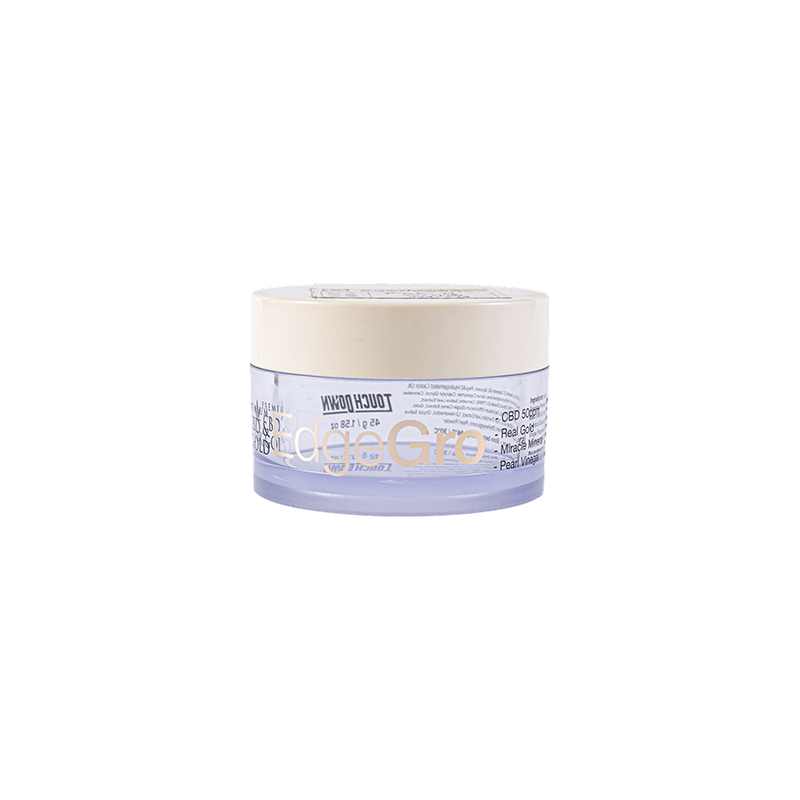 45 ml Clear PET Jar with Gold-Stamped Beige CapA 45 ml clear PET jar with beige gold-stamped cap for creams and serums; a standard format suited to decoration and visible product presentation.View Product →
If all of this has to be compressed into a checklist, it comes down to five questions. Does the material suit the formula? Does the capacity and neck size suit the way people will use it? Does the liner hold up against the content? Does the decoration survive daily handling? And has the whole assembly been tested as a unit rather than as separate parts? Answer those, and the jar stops being a risk.
We still think the best jar is the one a customer never notices, because it opens smoothly, closes firmly and gives up the last gram without an argument. If you would like to work through the options for a specific product, our plastic cream jar buyer's guide goes deeper into the selection process, and our team is always happy to talk through materials, sizes and closures.
