

 en
 English
 Español


Content
- 1 Baby Care Bottles Are a Packaging Category, Not a Feeding Product
- 2 Choosing the Material: PE, PP or PET
- 3 Matching Bottle Size to the Product and to the Parent's Hand
- 4 Closures and Dispensers: Where Usability Is Won or Lost
- 5 Hygiene, Cleanroom Production and the Tests That Matter
- 6 Decoration, Colour and the Brand Feel
- 7 A Practical Sourcing Checklist
- 8 What Working With Brotherpacking Looks Like
Search for baby care bottles and you will mostly find reviews of feeding bottles written for new parents. That is helpful if you are shopping for a nursery, but it is not much use if you are a brand owner, a formulator or a packaging engineer looking for the bottle that will hold a baby lotion, a wash, a massage oil or a cream. In that context the bottle is not a feeding product at all. It is a container that has to protect a gentle formula, survive a bathroom shelf for months and still feel comfortable in an adult's hand at three in the morning.
Baby Care Bottles Are a Packaging Category, Not a Feeding Product
In packaging terms, baby care bottles belong to the personal care family, sitting close to body lotion and shower gel bottles but with tighter expectations around mildness, labelling and handling. The contents are usually gentle: low-foam washes, fragrance-light lotions, oils, gels and ointments. That gentleness shapes the container more than people expect. A formula with a high surfactant load behaves differently from a thin oil, and both behave differently from a cream that needs a wide mouth and a scoop.
Most of the projects we see fall into a handful of familiar slots:
- Baby lotion and body milk, usually 100ml to 350ml, often with a pump or a flip-top cap
- Baby wash and shampoo, typically 200ml to 650ml, frequently squeezed one-handed in the bath
- Massage and baby oil, where clarity and a controlled pour matter
- Nappy creams and balms, which tend to want a wide-mouth jar or a soft tube rather than a bottle
Getting the category right at the brief stage saves a surprising amount of rework later, because it decides the material, the neck finish and the closure before anyone starts sketching a shape.
Choosing the Material: PE, PP or PET
Three materials cover the great majority of baby care bottles we produce. None of them is universally better; each one solves a different problem, and the right answer usually comes from the formula rather than from the shelf.
| Material | Feel and appearance | Where it tends to fit | Points to watch |
|---|---|---|---|
| PE (HDPE) | Soft, opaque or frosted, pleasant to squeeze | Lotions, washes and oils in 200ml to 650ml packs | Not the choice for showing a clear gel; decoration needs the right surface treatment |
| PP | Slightly stiffer, glossy, strong chemical resistance | Closures, wide-mouth jars and small travel formats | Less flexible than PE, so better for pouring and scooping than for squeezing |
| PET | Clear and glass-like with good gloss | Clear gels, oils and ranges that rely on a clean look | Stiffer in the hand; aggressive formulas deserve a compatibility check |
Recycled content is increasingly part of the conversation, and it can be worked into several of these materials, but availability and quality consistency vary by grade. Whatever the material, ask for migration and compatibility data against your actual formula rather than a generic statement, and confirm that the documentation matches the market where the product will be sold.
Matching Bottle Size to the Product and to the Parent's Hand
Baby care packs tend to cluster into three practical sizes. A small 100ml bottle works well for a first trial, a hospital bag or a travel kit. A 200ml bottle is the everyday workhorse for lotion and wash, small enough for one hand and light enough to hold while the other hand is busy. A 650ml bottle suits a wash or a refill pack that a family will use daily for weeks.
Shape matters as much as volume here. Rounded shoulders and a slight waist give fingers something to grip when the bottle is wet, and a neck wide enough for a smooth pour avoids the frustrating shake that parents remember. We keep a series of moulds specifically for this category, including a soft easy-grip round bottle and a larger durable format with a lighter environmental footprint.
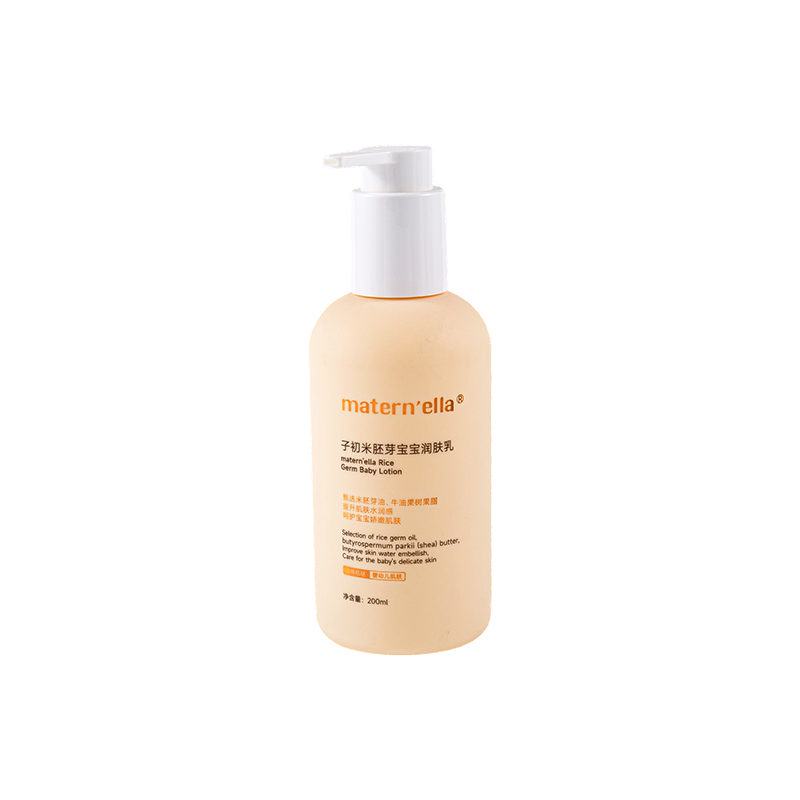 200ml Round Easy-Grip PE Bottle with PumpA 200ml PE bottle with rounded grip and 28-thread pump for controlled lotion dispensing; suits daily skincare and travel.View Product →
For lotion and body milk, a 200ml pack with a comfortable grip and a controlled dispensing cap is usually the sweet spot. Where a brand wants to extend the same bottle across a wider body care range, the geometry can often be carried over with a change of closure and decoration rather than a new mould.
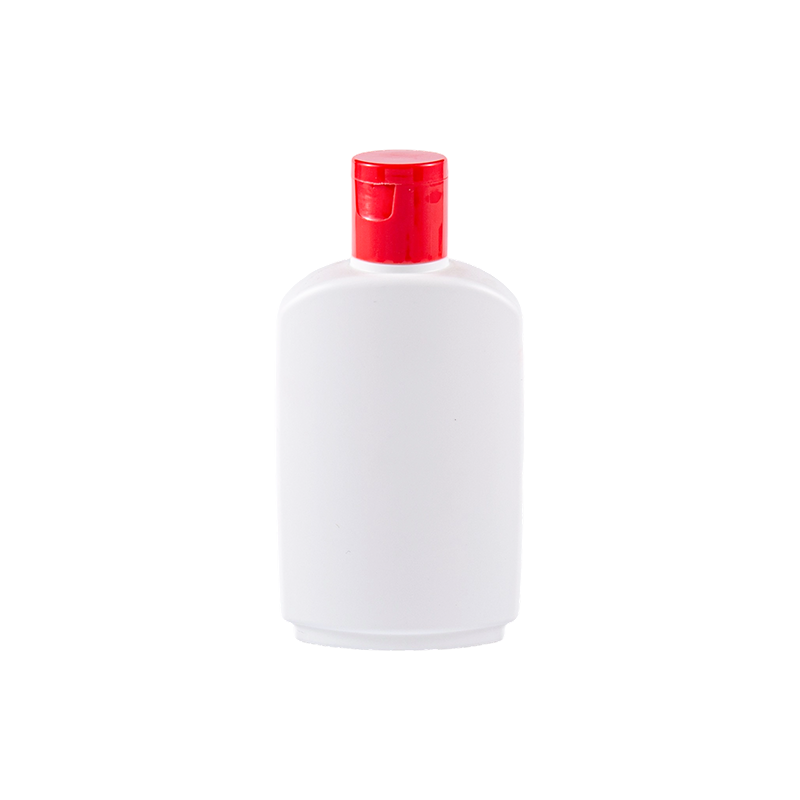 100ml Durable PE Body Lotion BottleA compact 100ml PE bottle with secure 20-teeth closure for body lotion; suited to travel and everyday dispensing.View Product →
For wash and shampoo, the larger 650ml format gives a family pack that still reads as baby care rather than adult shower gel. Soft PE, a generous neck and a well-chosen flip-top do more for the daily experience than any decorative flourish.
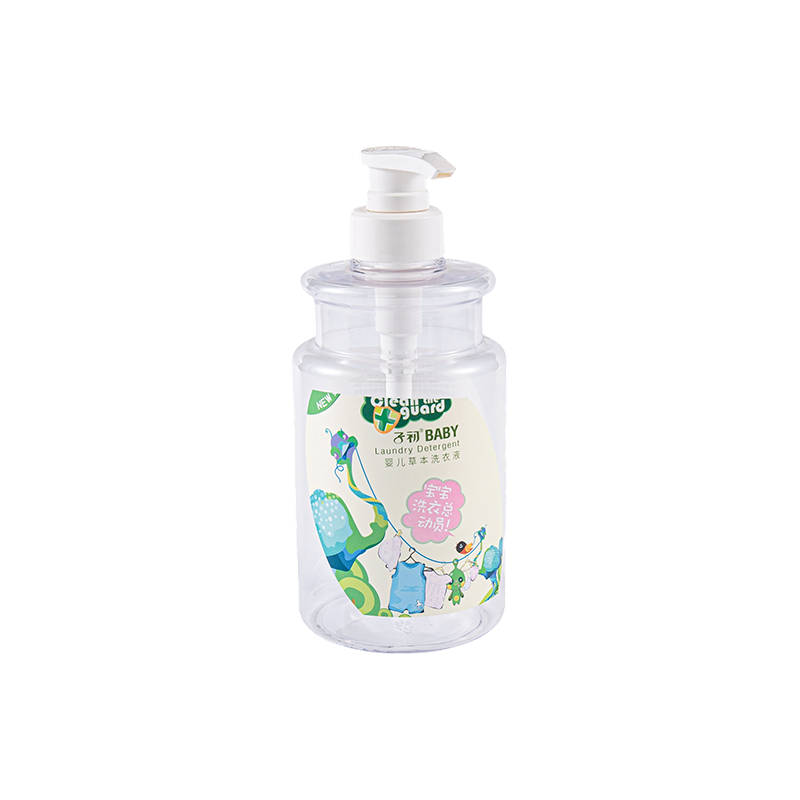 650ml Clear PE Bottle with White PumpA 650ml recyclable PE bottle with visible fill level and 32-thread pump for shampoo, shower gel and household liquids.View Product →
Closures and Dispensers: Where Usability Is Won or Lost
A bottle is only as good as its closure. On baby care lines we work most often with three options. A lotion pump gives measured doses and keeps the formula away from air, which suits body milk and massage products. A flip-top or disc-top cap is quick to open one-handed and is the natural choice for wash and shampoo. A wide-mouth jar with a simple screw lid remains the most practical answer for creams and balms.
Two details deserve early attention. The first is torque and tamper evidence: parents should be able to see that the pack is intact, but should not need tools to open it. The second is small parts. Any collar, insert or overcap that could come loose in a bathroom is a design risk worth removing before the tooling stage. If a brand asks us for advice, we usually suggest testing the closure wet and with slippery hands, because that is the condition the pack will actually meet.
Hygiene, Cleanroom Production and the Tests That Matter
Baby care packaging is judged on hygiene long before it is judged on aesthetics. Our own production runs in a 100,000-class clean workshop, and the process is controlled from incoming resin through to packed cartons under ISO-based quality procedures. Technology and quality staff make up roughly 40 percent of our team, which is unusual in injection and blow moulding and reflects how much of the work is inspection rather than machine time. You can read more about our quality control process if you want the detail behind that statement.
Beyond the workshop, three test families usually come up in a baby care project: drop and compression testing of the filled pack, closure leakage after simulated transport, and compatibility or migration checks against the formula itself. Warm, humid storage is worth adding for anything that will sit in a bathroom. Where a customer asks how the environment is maintained, we point to the clean workshop and the procedures around it rather than to a single certificate.
Decoration, Colour and the Brand Feel
Baby care shelves are calm and pastel, and the decoration should support that rather than compete with it. Opaque PE takes colour well and reads as soft and trustworthy. Frosted PET gives a clean, almost clinical clarity that suits oils and clear gels. Matte or soft-touch finishes add warmth but need testing for scuffing in a changing bag.
We handle printing, labelling and spray coating in house, which means a brand can settle the bottle, the cap and the surface finish in one conversation instead of three. One practical note from experience: keep the print area clear of the grip zone. Decoration that wears away exactly where hands hold the bottle is the most common cosmetic complaint we hear about baby care packs.
A Practical Sourcing Checklist
When you are comparing suppliers for a baby care bottle, these questions tend to separate a real partner from a catalogue:
- Which resin grade is proposed, and is it documented for the market you are selling into?
- Can the supplier provide compatibility or migration data against your actual formula?
- Is the closure sourced and tested together with the bottle, or separately?
- What drop and leakage testing is standard, and what costs extra?
- Is the production area controlled, and can you visit or audit it?
- How is decoration handled, and what is the expected wear life of the print?
- What are the tooling lead times, and who owns the mould afterwards?
A supplier who answers these without hesitation is usually also the one who will flag a problem before the tooling is cut.
What Working With Brotherpacking Looks Like
We have spent more than 30 years making plastic bottles for personal care, household and health products, from a 20,000 square metre plant in Suzhou with around 150 people. Our mould library holds several thousand designs, and the work runs from concept and tooling through injection and blow moulding to printing, labelling and coating, so a baby care range can move from a sketch to a filled pack without changing hands. We are a packaging manufacturer, not a brand, and we prefer to say that plainly: our job is to make the bottle behave well, look right and arrive on time.
If you are planning a baby lotion, wash or oil and are unsure whether PE, PP or PET is the right starting point, send us the formula basics, the target volume and a rough idea of the shelf you are aiming for. A short conversation about the contents usually narrows the material and the closure faster than a long specification document, and it is a more pleasant way to begin a project that will end up in someone's bathroom.
