

 en
en  English
 Español


Content
- 1 Why Hair Products Are Harder to Package Than They Look
- 2 Choosing the Right Plastic: PE, PET or PP
- 3 Matching the Bottle Format to the Product
- 4 Closures, Pumps and Dispensing Systems
- 5 Decoration, Finishing and Shelf Presence
- 6 Custom Moulds and Personalised Bottles
- 7 Quality Control, 100,000-class cleanroom
- 8 A Quick Checklist Before You Approve a Bottle
- 9 Let's Build the Right Bottle Together
Walk down the hair care aisle of any store and you will see the same challenge solved in a dozen different ways. A shampoo bottle has to survive a wet shower shelf. A serum bottle has to look almost like a piece of jewellery. A mousse bottle has to release an even, controlled dose every single time. Packaging for hair products is a chemical container, a dispensing device, a shelf-side billboard and a bathroom companion all at once.
At Suzhou Brotherpacking Plastic Co., Ltd., we have spent more than 30 years making plastic bottles for exactly this kind of product. In this guide we would like to share how our team thinks through packaging for hair products: the materials, the shapes, the closures and the small design decisions that decide whether a bottle works beautifully or fails quietly in a customer's bathroom.
Why Hair Products Are Harder to Package Than They Look
Hair care formulas are among the most chemically active products on a cosmetic shelf. A single shampoo may contain anionic surfactants, salts, fragrances, preservatives and pH adjusters; conditioners and masks add cationic polymers and heavy silicones; scalp treatments bring alcohol, salicylic acid or concentrated essential oils. Styling products can carry a solvent load heavy enough to stress any container that was not chosen with chemistry in mind.
The bottle also has to survive its environment. Bathrooms are hot, humid and unforgiving. Bottles are dropped, squeezed, tipped upside down and left standing in a puddle of water. A design that looks perfect in a mock-up can craze or crack within a few weeks of real use.
- Chemical compatibility: the wall must resist the formula for the whole shelf life, not just on day one.
- Mechanical strength: drop resistance and squeeze recovery matter most in large, heavy formats.
- Dispensing: viscosity decides whether you need a disc top, a pump, a spray or a foam valve.
- Handling: wet hands and slippery surfaces are the normal condition, not the exception.
- Appearance: clarity, gloss, colour and decoration all carry the brand promise.
Choosing the Right Plastic: PE, PET or PP
Almost every hair care bottle we produce is made from one of three workhorse plastics. None of them is universally better; each one solves a different problem.
| Material | Appearance | Chemical resistance | Best suited to | Typical capacity |
|---|---|---|---|---|
| HDPE (PE) | Opaque, frosted or soft-touch; warm and matte | Excellent against surfactants, acids and alkalis | Shampoo, conditioner, hair masks and large body-care formats | 200-1000ml |
| PP | Opaque, translucent or clarified, with good gloss | Excellent; the strongest option for alcohol-rich and acidic formulas | Scalp tonics, anti-dandruff treatments, mask and cream jars | 50-500ml |
| PET | Glass-clear, high gloss, premium feel | Good for most formulas, but sensitive to some solvents and concentrated oils | Premium shampoo, serums, sprays and transparent lotion bottles | 15-500ml |
The decision becomes much easier once you can answer two questions: how aggressive is the formula, and how much transparency does the brand need? If the formula is alcohol-heavy and clarity is not required, PP is usually the right answer. If a glass-clear look is the whole point of the design, PET usually wins, and we then check the concentrate against the bottle wall before tooling begins. Recycled and bio-based resins are also moving quickly into this category; our industry notes on personal care bottles shifting towards renewable and biodegradable materials cover what is realistic today and what is still experimental.
Matching the Bottle Format to the Product
Format follows function. The shape, neck finish and wall thickness of a bottle should be driven by how the product is used, not by what looks good in a single photograph.
Shampoo, conditioner and mask bottles
These are the workhorses of any range. They are large, gripped with wet hands and used several times a week for months. Wide, softly curved shoulders and a slight waist help the hand find the bottle without looking. For 500ml formats a PE round or oval bottle remains the most reliable choice, and it keeps unit cost sensible at high volume.
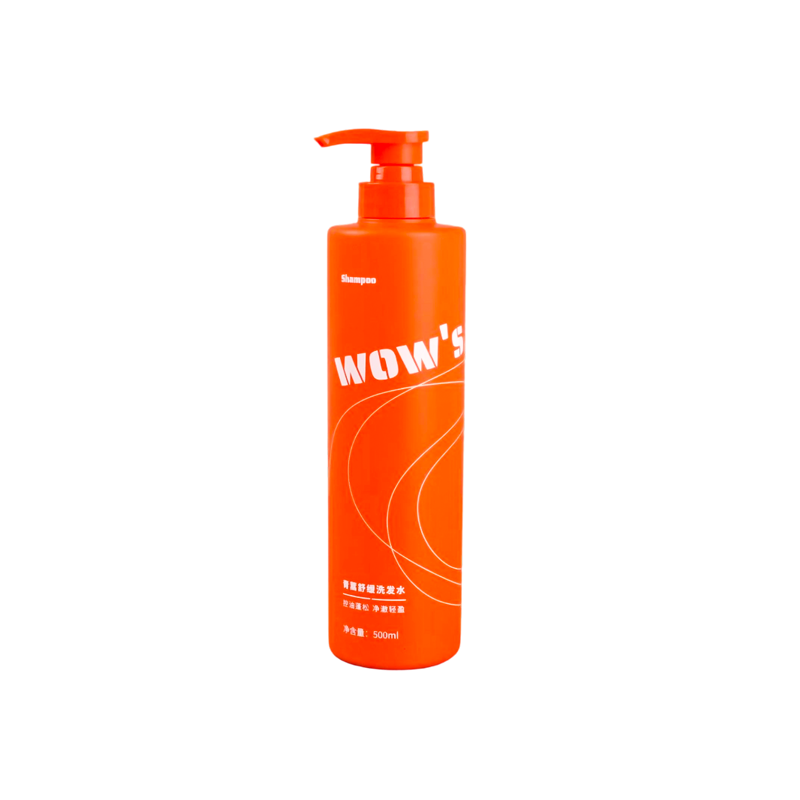 500ml convenient shampoo PE bottleProduct Specifications:500ml bottleView Product →
Serums, oils and scalp treatments
Small formats carry the highest perceived value, so clarity and surface finish matter more than wall thickness. Bottles between 30ml and 120ml with a dropper, a fine-mist spray or a treatment pump let the customer see the product and signal a premium position. When the formula contains a high level of silicone or essential oil, test the concentrate against the PET wall first and move to PP if any clouding appears.
When shelf presence is the priority, a clear PET bottle with a coloured push or pump head gives the clean, glass-like look that consumers associate with salon brands, while staying light and shatter-resistant in the shower.
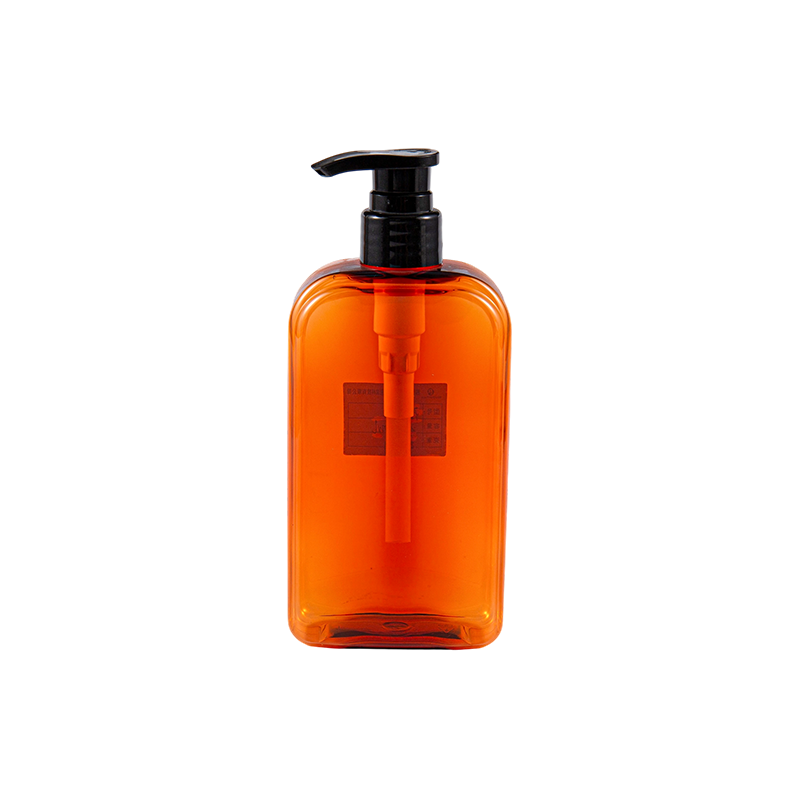 400ml transparent and beautiful PET push bottleProduct Specifications:400ml bottleView Product →
Closures, Pumps and Dispensing Systems
The closure is where most packaging problems actually start. We match the neck finish, the gasket and the actuator as one system, and then test the assembled pack with your formula rather than with water.
- Disc top and flip top: the everyday answer for shampoo and conditioner.
- Lotion pump: a controlled dose for conditioners, treatments and oils.
- Fine-mist spray: leave-in conditioners, heat protection and scalp toners.
- Foam or mousse valve: styling foam and cleansing mousse.
- Dropper or treatment pump: serums and scalp concentrates.
Decoration, Finishing and Shelf Presence
Once the bottle and closure are right, decoration turns a container into a brand asset. Because we handle moulding, printing, labelling and spraying under one roof, the surface finish can be planned together with the mould instead of being fixed afterwards.
- Silk-screen and multi-colour printing for sharp, durable graphics.
- Hot stamping and metallic effects for premium lines.
- Frosting, soft-touch and matte spray for a modern, tactile feel.
- Self-adhesive labelling for short runs, seasonal editions and test launches.
- Colour matching to a brand palette, including amber and light-blocking options.
Custom Moulds and Personalised Bottles
Standard bottles cover most needs, and they are the fastest route to market. When a brand needs a shape of its own, whether that is a squared-off silhouette, an integrated handle or an unusual shoulder, we design the mould, build it and run first samples before full production. With more than 5,000 functional moulds already developed and 80 injection machines plus all-electric blow moulding lines in house, the gap between a sketch and a shelf-ready bottle is shorter than most people expect. You can browse our hair care bottle range to see the formats we already produce, or send us a drawing and let our engineers take it from there.
Quality Control, 100,000-class cleanroom
Hair care packaging sits close to the body and, with anti-dandruff or scalp products, close to skin that may already be sensitive. Our production runs in a 100,000-class cleanroom, following ISO quality controls and food quality safety from raw material intake to the final carton. Technical and quality staff make up around 40% of our team, and every new bottle goes through dimensional checks, drop testing, leak testing and compatibility review before release. For brands that need documentation for a retailer or a regulatory file, we can support the material and migration information your compliance team will ask for.
A Quick Checklist Before You Approve a Bottle
- Confirm the formula's chemical aggressiveness and pH range.
- Decide whether the pack needs transparency or opacity.
- Match the capacity to the usage cycle, not to the shelf.
- Choose the closure and test it with the real product, not with water.
- Check the grip with wet hands and with gloves.
- Verify drop, leak and squeeze-recovery performance.
- Plan decoration early so the surface finish suits the process.
- Confirm the recycled content and documentation your market requires.
Let's Build the Right Bottle Together
Packaging for hair products is never just a container. It is the first thing a customer touches, the last thing they see before deciding to buy again, and a quiet test of whether a brand understands how people actually wash their hair. If you are developing a shampoo, a serum, a scalp tonic or a styling foam, our team would be glad to look at your brief, suggest the right material and format, and turn it into a bottle that performs in the bathroom as well as it does on the shelf.
