

 en
en  English
 Español


Content
- 1 Materials Used in Liquid Detergent Bottle Manufacturing
- 2 Common Bottle Formats and Volume Ranges
- 3 Closure Systems: Caps, Dosing Cups, and Dispensing Mechanisms
- 4 Bottle Wall Design: Thickness, Panels, and Structural Features
- 5 Labeling and Decoration Options for Liquid Detergent Bottles
- 6 Key Considerations When Sourcing Liquid Detergent Bottles
Liquid detergent bottles are among the most high-volume, technically demanding packaging formats in the consumer goods industry. Every year, billions of units are produced globally for laundry detergent, dishwashing liquid, fabric softener, multi-surface cleaners, and industrial cleaning products. Despite their ubiquity, the design and specification of liquid detergent bottles involves a complex set of decisions around material selection, bottle geometry, closure systems, labeling, fill compatibility, and sustainability — decisions that directly affect product protection, shelf appeal, production line compatibility, and end-of-life recyclability. Whether you are a brand owner specifying new packaging, a packaging engineer evaluating material options, or a procurement manager comparing supplier capabilities, understanding the technical and commercial dimensions of liquid detergent bottle selection will help you make better decisions and avoid costly specification errors.
Materials Used in Liquid Detergent Bottle Manufacturing
The choice of material for a liquid detergent bottle is the foundational specification decision, as it determines the bottle's chemical resistance, mechanical properties, clarity, weight, recyclability, and manufacturing process compatibility. Four primary materials dominate liquid detergent bottle production, each with specific advantages and limitations.
HDPE (High-Density Polyethylene)
HDPE is the most widely used material for liquid detergent bottles globally, and its dominance reflects a combination of properties that suit detergent packaging almost perfectly. HDPE has excellent chemical resistance to the surfactants, enzymes, bleach additives, and alkaline builders used in laundry and dishwashing detergents — it resists swelling, stress cracking, and permeation by these chemicals even under long-term storage conditions. Its relatively high stiffness-to-density ratio means HDPE bottles can be designed with thin walls while maintaining adequate top-load strength for stacking on pallets and retail shelves. HDPE is opaque in its natural state (though it can be pigmented in any color), which is advantageous for products sensitive to UV degradation. It is also one of the most widely recycled plastics in the world, classified as resin code #2, and post-consumer recycled (PCR) HDPE is increasingly incorporated into detergent bottle production as brands pursue sustainability commitments.
PET (Polyethylene Terephthalate)
PET is used for liquid detergent bottles where transparency or high visual clarity is a packaging objective — allowing consumers to see the product color, level, and clarity as a quality indicator. PET has good chemical resistance to most detergent formulations, though it is less resistant to some highly alkaline or solvent-containing formulations than HDPE. PET bottles are produced by injection stretch blow molding (ISBM) or reheat stretch blow molding (RSBM), which produces bottles with biaxially oriented polymer chains that provide excellent clarity, barrier properties, and drop resistance. The primary limitation of PET for detergent packaging is its higher sensitivity to certain surfactant concentrates and its lower chemical resistance to bleach-containing formulations compared to HDPE. PET is classified as resin code #1 and is the most widely recycled plastic globally, making it a strong choice for brands with clear recycling communication strategies.
PP (Polypropylene)
Polypropylene is used in liquid detergent packaging primarily for trigger sprayer bottles, caps, closures, and some squeezable bottle formats. PP has excellent chemical resistance including to bleach and concentrated alkaline solutions, good fatigue resistance (important for snap-fit closures and living hinge mechanisms), and can be produced in translucent or opaque forms. PP bottles are typically produced by extrusion blow molding and have slightly lower clarity than PET but good chemical resistance for a wide range of cleaning product formulations. PP is classified as resin code #5 and is recyclable, though collection infrastructure for PP bottles is less developed than for HDPE and PET in many markets.
PCR and Bio-Based Materials
The incorporation of post-consumer recycled (PCR) content into liquid detergent bottles has accelerated significantly as brand owners respond to consumer and regulatory pressure on single-use plastic packaging. PCR HDPE and PCR PET are both commercially available and are being used at PCR content levels from 25% to 100% in detergent bottles by leading consumer goods companies. Using PCR material reduces the carbon footprint of the bottle's production and demonstrates commitment to circular economy principles, but it introduces processing challenges — PCR resin has more variable melt flow and color consistency than virgin resin, requiring more sophisticated quality control during bottle production. Bio-based PE and PET — produced from sugarcane ethanol rather than fossil feedstocks — are emerging alternatives that offer the same properties as their fossil-based equivalents with a lower carbon footprint, though at a cost premium.
Common Bottle Formats and Volume Ranges
Liquid detergent bottles are produced in a wide range of formats and volumes to serve different retail channels, product categories, and consumer usage occasions. The format selection is driven by the product's intended use, the target retail environment, and the consumer's expected handling and dispensing behavior.
| Format | Typical Volume Range | Primary Material | Typical Application |
| Standard handle bottle | 1L – 5L | HDPE | Laundry detergent, fabric softener |
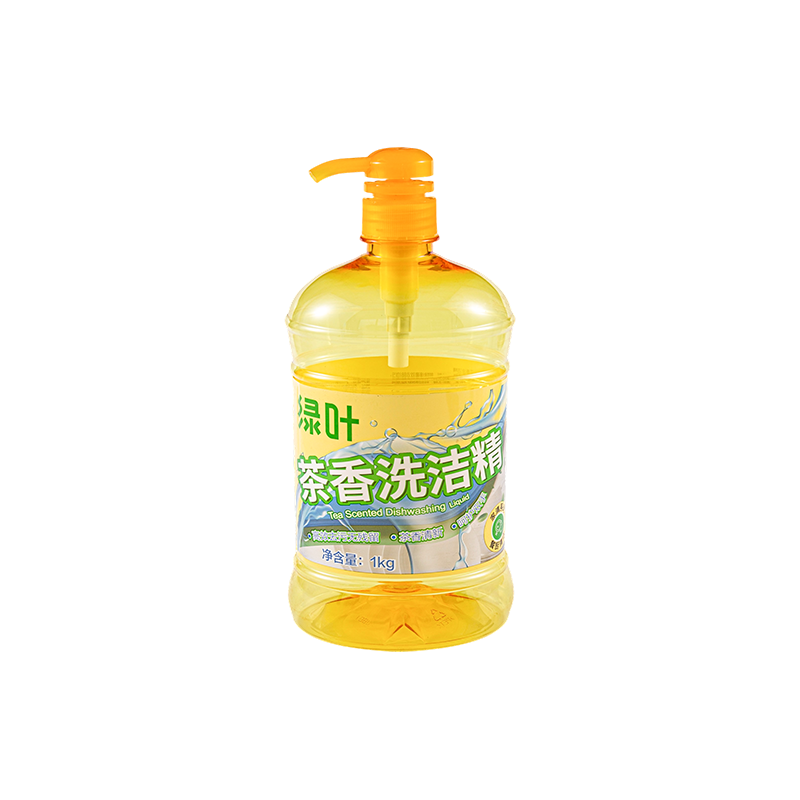
| Slim/tall bottle | 500ml – 1.5L | PET, HDPE | Dishwashing liquid, hand soap |
| Trigger sprayer bottle | 500ml – 1L | HDPE, PET, PP | Multi-surface cleaner, bathroom cleaner |
| Jerrycan / drum format | 5L – 25L | HDPE | Industrial/institutional cleaning products |
| Pouch-refill bottle | 750ml – 2L | HDPE, PCR HDPE | Concentrated detergent, refill systems |
Closure Systems: Caps, Dosing Cups, and Dispensing Mechanisms
The closure system on a liquid detergent bottle is far more than a simple seal — it is a functional dispensing interface that affects consumer convenience, dosing accuracy, spillage, product waste, and child safety compliance. Selecting the appropriate closure type for the product and consumer use case is a critical packaging design decision.
Screw Caps with Dosing Cups
The most common closure format for laundry liquid detergent bottles is a screw cap combined with a separate dosing cup — a measured-volume cup that serves as both the closure and the dispensing measure when inverted and screwed onto the bottle. The dosing cup is typically calibrated with fill lines corresponding to different load sizes (regular, large, heavily soiled), guiding the consumer to use the correct dose and reducing product waste from overdosing. The cap must provide a leak-proof seal at the thread engagement, resist loosening from drop impact, and have sufficient thread engagement to maintain seal integrity through the bottle's distribution and retail life. For concentrated or high-viscosity laundry liquids, the dosing cup inner surface is often treated or shaped to promote drainage, reducing product residue left in the cup between uses.
Flip-Top and Snap-Cap Closures
Flip-top closures — hinged caps that open with a thumb press and close with a snap — are standard on dishwashing liquid bottles, hand soap bottles, and single-serve or pour-and-go formats where one-handed opening is a consumer convenience requirement. The living hinge mechanism in PP flip-top closures must withstand thousands of open-close cycles without fatigue failure, and the snap-close force must be sufficient to prevent accidental opening during handling and transportation while remaining easy to open with a single hand. Flip-top closures are typically injection-molded in PP and applied to the bottle by induction sealing or press-fit over a tamper-evident band on the bottle neck.
Child-Resistant Closures
In many markets, concentrated laundry detergents — particularly laundry capsule liquids and concentrated liquid detergents — are required by regulation to use child-resistant closures (CRC) that prevent young children from accessing the product. In the United States, the Poison Prevention Packaging Act (PPPA) requires CRC on liquid detergents containing 10% or more by weight of cationic surfactants. In Europe, EU Regulation 1272/2008 (CLP Regulation) triggers CRC requirements for products classified as hazardous to children. CRC designs for liquid detergent bottles typically use a push-and-turn or squeeze-and-turn mechanism that requires a specific two-step action to open — an action that most young children cannot perform but that adults find manageable with reasonable effort.
Bottle Wall Design: Thickness, Panels, and Structural Features
The structural design of a liquid detergent bottle wall must balance several competing requirements: sufficient top-load strength for pallet stacking, adequate sidewall stiffness to resist deformation during handling and squeezing, enough flexibility in designated grip areas to allow controlled dispensing, and minimum wall thickness consistent with all these structural requirements to minimize material use and cost.
Vacuum panels are a specific structural feature incorporated into the sidewalls of many liquid detergent bottles to manage the pressure changes that occur as the bottle cools after filling and as product is dispensed over the bottle's life. When a hot-filled detergent cools in a sealed bottle, the contents contract slightly, creating a partial vacuum inside. Without designed-in vacuum panels — recessed areas in the bottle sidewall that flex inward in a controlled manner — the vacuum would cause uneven deformation of the bottle that looks like damage or defectiveness to consumers. Vacuum panels are sized and positioned by structural analysis to absorb the expected volume change without compromising the bottle's visual appearance or structural integrity.
The handle design on large-format detergent bottles (1.5 liters and above) is a critical ergonomic and structural element. A well-designed handle must distribute the weight of a full bottle across the user's hand without cutting into the fingers, position the bottle's center of gravity close to the grip point to minimize wrist torque during pouring, and be strong enough to support the dynamic loads of carrying a full bottle without deforming or cracking. Integrated handles — formed as part of the blow molding process — are preferred over separately assembled handles for their structural integrity, reduced part count, and lower production cost.
Labeling and Decoration Options for Liquid Detergent Bottles
The label on a liquid detergent bottle carries regulatory information (ingredients, usage instructions, hazard warnings, dosing guidance), brand identity, and consumer appeal elements. The labeling method affects both the visual result and the production line compatibility of the bottle.
- Pressure-sensitive labels (PSL): Self-adhesive labels applied to the bottle surface by label applicator machines on the filling line. PSL offers maximum graphic flexibility, short lead times for design changes, and compatibility with virtually all bottle materials and geometries. The adhesive must be selected for compatibility with the detergent — any product spillage or condensation that contacts the label edge must not cause the label to lift or delaminate.
- Sleeve labels (shrink sleeve and stretch sleeve): Full-body sleeve labels that wrap 360 degrees around the bottle, providing maximum decoration area and the ability to cover irregular bottle shapes that PSL cannot conform to. Shrink sleeve labels — applied as a loose sleeve and heat-shrunk to conform to the bottle — are used on bottles with significant taper or surface contours. The label material must be compatible with the bottle material for recycling (PET label on PET bottle, or separable PETG label that floats off during recycling sorting).
- In-mold labels (IML): Labels incorporated into the bottle during the blow molding process, becoming an integral part of the bottle wall. IML provides a premium, seamless appearance without label edges or adhesive, and the label cannot be removed or damaged in handling. IML adds complexity to the bottle production process and requires higher tooling investment but produces the highest-quality visual result for premium product positioning.
- Direct printing: Inkjet or screen printing directly onto the bottle surface, eliminating the label substrate entirely. Direct printing is used for simple graphics or regulatory information on industrial bottles and is gaining interest in sustainable packaging as it removes the label material from the packaging system, simplifying recycling.
Key Considerations When Sourcing Liquid Detergent Bottles
For brand owners and packaging procurement managers evaluating liquid detergent bottle suppliers, the following practical criteria should form the basis of supplier assessment and specification development:
- Chemical compatibility testing: Request compatibility test data confirming that the proposed bottle material and closure have been tested with the actual detergent formulation — not a generic formulation — over a relevant shelf-life period. Accelerated compatibility testing at elevated temperature (typically 40°C for 3–6 months) is the standard method for confirming that the bottle will not swell, stress crack, or lose structural integrity in contact with the product.
- Top-load and drop test performance: Confirm that the bottle design meets your stacking requirements (typically 3–5 pallets high in warehouse and retail distribution) and passes a filled-bottle drop test from the relevant height (typically 1.0–1.5 meters onto a hard surface) without leakage or structural failure.
- Filling line compatibility: Verify that the bottle neck finish and closure are compatible with your filling line equipment — specifically the fill head diameter, the conveyor guides, the cap applicator, and any induction sealing equipment. Dimensional deviations in bottle neck diameter or height can cause misalignment on high-speed filling lines.
- Sustainability documentation: For bottles incorporating PCR content, request certification of the PCR content percentage and the chain-of-custody documentation confirming that the recycled material meets food-contact or relevant safety standards for your product category.
- Regulatory compliance: Confirm that the bottle and closure materials comply with applicable food-contact or chemical packaging regulations in all markets where the product will be sold — including EU Regulation 10/2011 for plastic food-contact materials, FDA 21 CFR for US markets, and any market-specific regulations for hazardous household chemicals.
